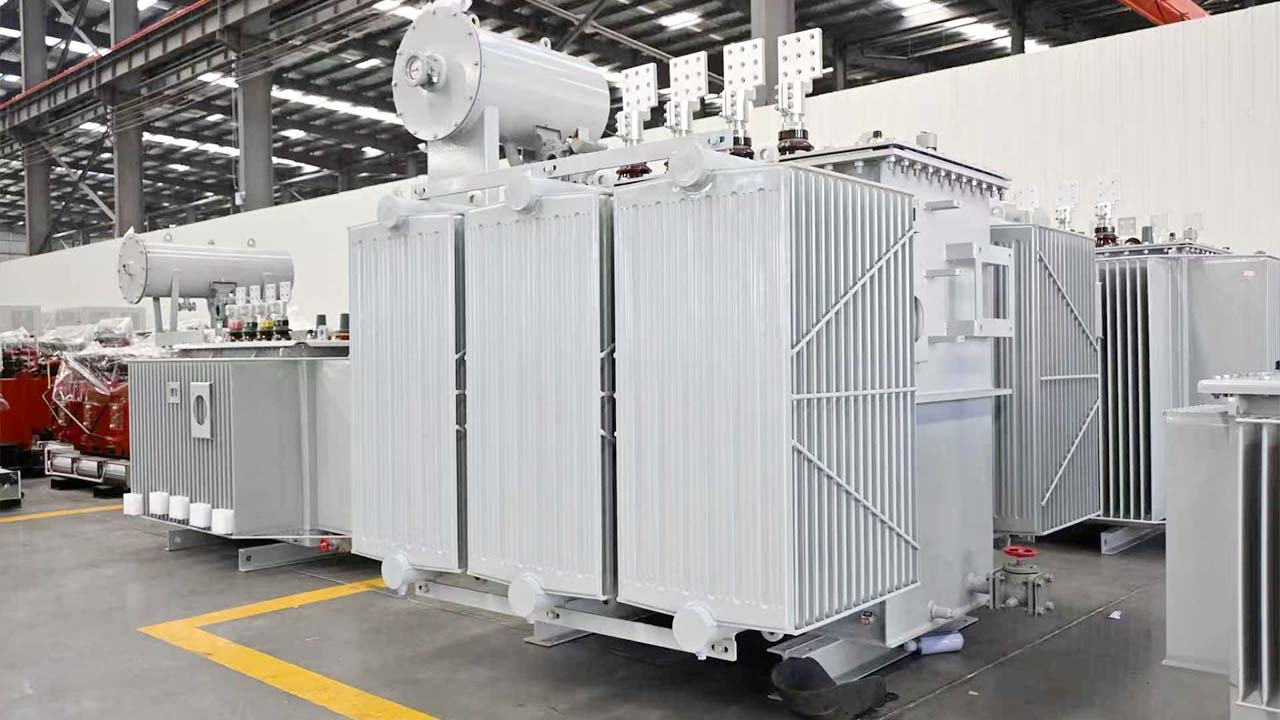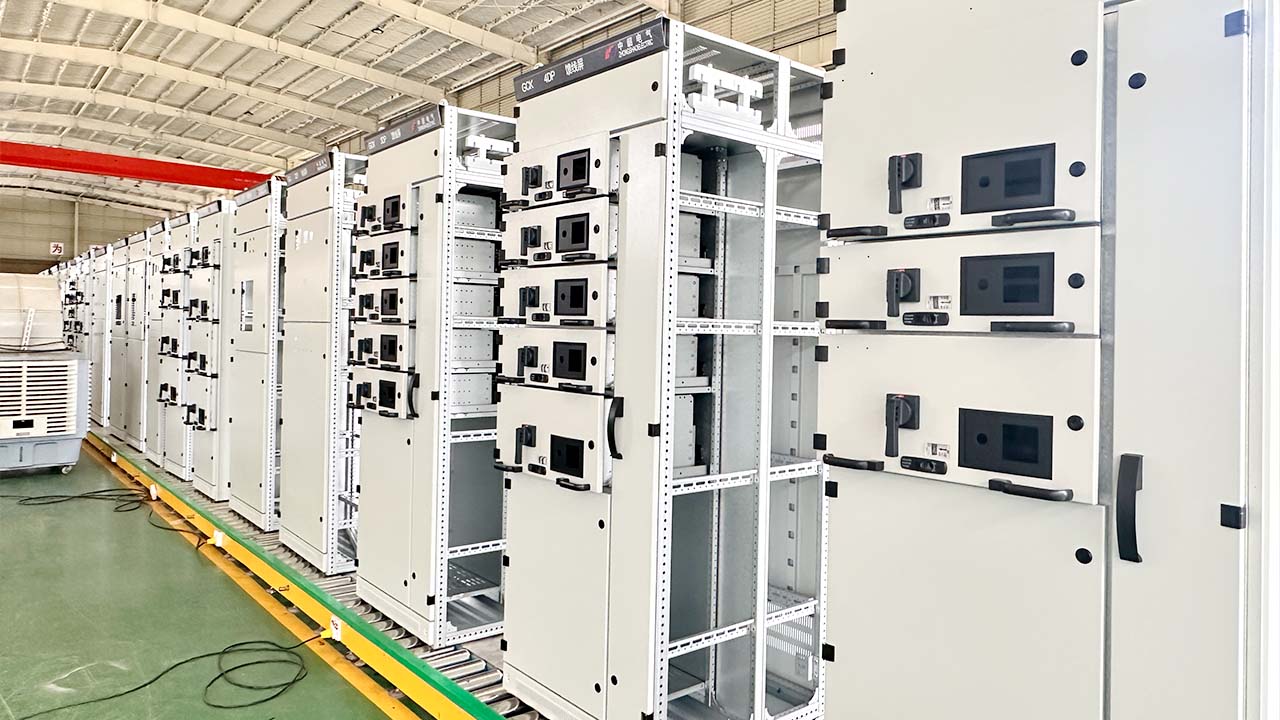
Modern data centers depend on continuous, stable, and efficient power. Server racks, UPS systems, cooling equipment, storage platforms, and network infrastructure operate around the clock, often under rapidly changing loads. A transformer failure can interrupt critical services and create major financial losses.
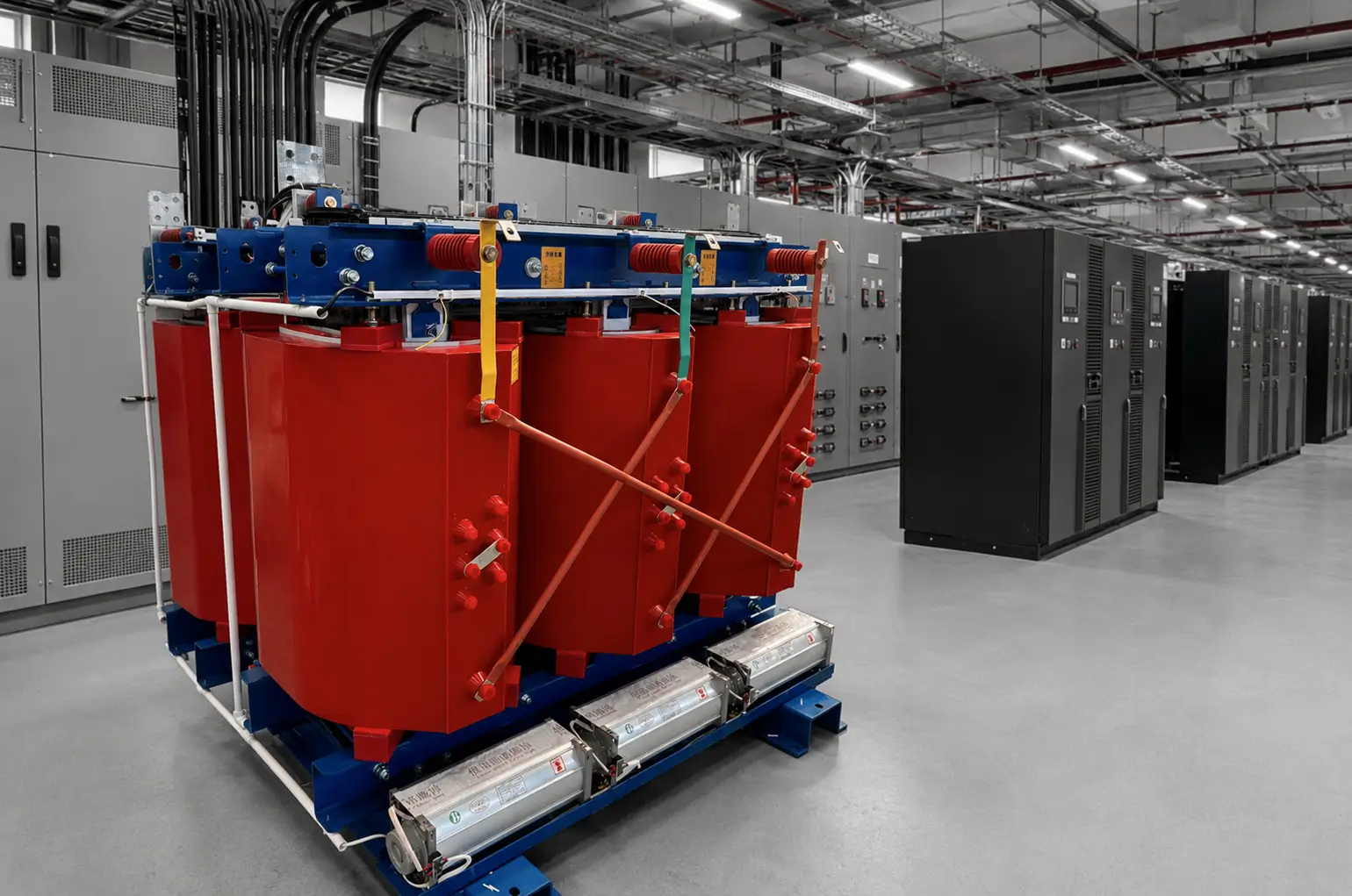
For this reason, data center designers increasingly use cast resin dry-type transformers for indoor power distribution. These transformers use epoxy resin insulation instead of flammable liquid, making them suitable for buildings where fire safety, low maintenance, compact installation, and temperature monitoring are essential.
This article explains why cast resin dry-type transformers are widely used in modern data centers and introduces suitable ZHONGSHAO SC(B) transformer solutions.
Fire Safety Is the First Priority
Data centers contain dense concentrations of electrical equipment, cables, batteries, and cooling systems. Any fire can spread quickly and threaten both the facility and its digital services.
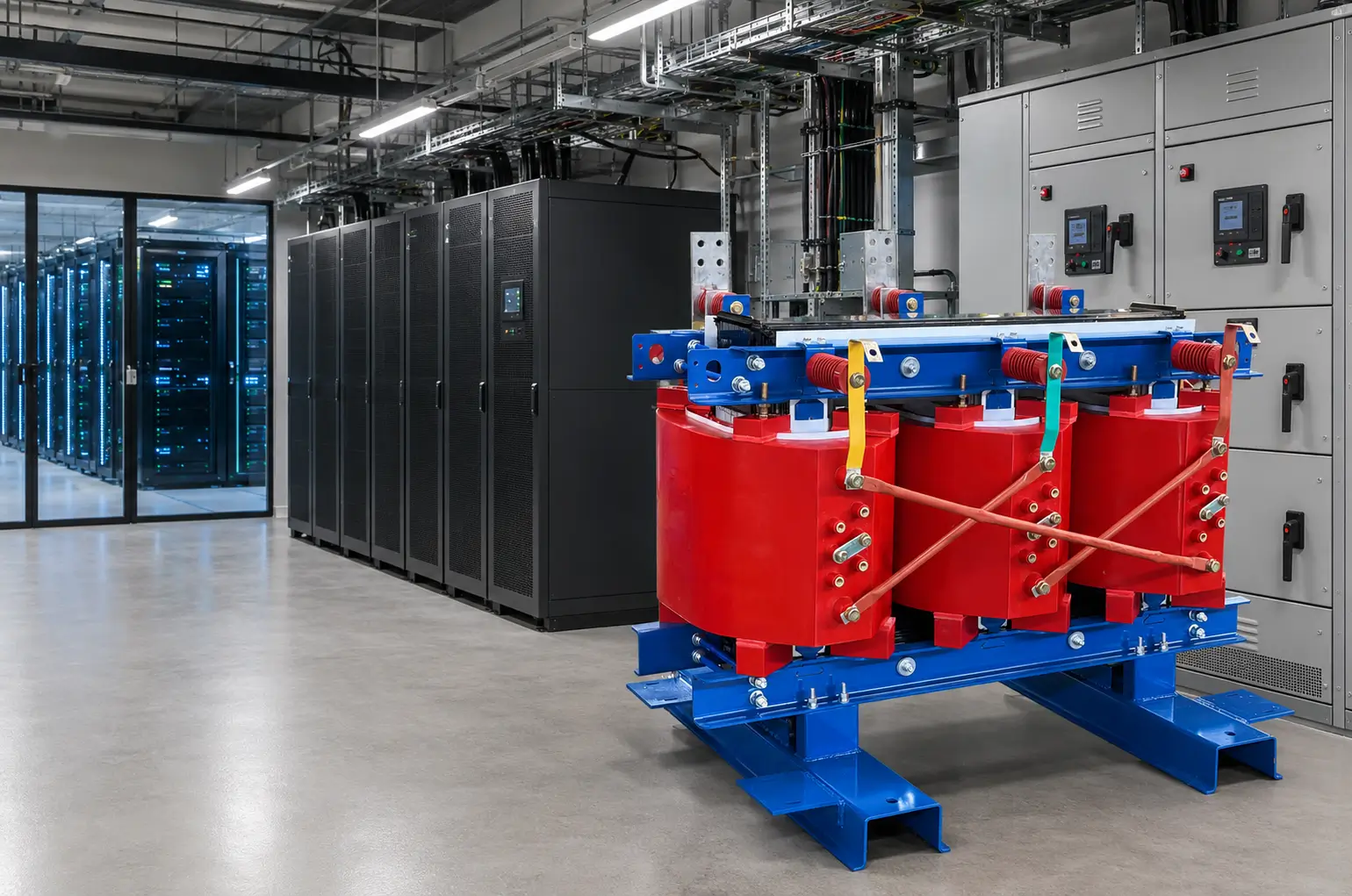
Cast resin transformers contain no insulating oil. Their windings are vacuum-cast in epoxy resin, providing solid insulation and self-extinguishing characteristics when designed to the required fire-performance class.
Their main fire-safety advantages include:
- No flammable transformer oil
- No oil leakage or containment pit
- Reduced risk of fire spreading through liquid insulation
- Suitability for indoor electrical rooms
- Easier installation in high-rise or occupied buildings
Because there is no oil tank, the transformer can often be installed closer to UPS rooms, server halls, and low-voltage switchgear. The specific fire class, enclosure, ventilation, and local code requirements must still be confirmed for each project.
Compact Indoor Installation
Space inside a data center is expensive. Electrical rooms compete with server halls, cooling infrastructure, battery rooms, and maintenance areas.
Cast resin transformers fit compact indoor layouts and may reduce the need for separate outdoor transformer areas. Installing them near the load center shortens low-voltage cable runs, reducing voltage drop, cable cost, and I²R distribution losses.
This proximity can also support a better Power Usage Effectiveness result because less energy is lost between the transformer and the IT equipment.
The actual footprint depends on capacity, enclosure protection, ventilation clearances, cable entry, and maintenance access.
Moisture Resistance and Indoor Reliability
Data centers use large cooling systems, and some facilities operate in high-humidity regions. Moisture can weaken insulation and increase the risk of tracking or partial discharge.
The high-voltage windings of a cast resin transformer are encapsulated in epoxy resin, providing strong resistance to moisture, dust, and contamination. This is valuable in basement rooms, coastal regions, and facilities with frequent temperature changes.
Lower Maintenance for 24/7 Facilities
Data centers aim to minimize planned maintenance and avoid unexpected shutdowns. Oil-immersed transformers may require oil-level checks, oil sampling, leak inspection, and monitoring of liquid insulation.
Cast resin transformers eliminate many oil-related tasks. Routine maintenance mainly involves cleaning ventilation passages, checking connections, inspecting fans and temperature sensors, verifying grounding, and testing alarm and trip functions.
Low Noise Near Critical Rooms
Transformer noise matters when electrical rooms are close to offices, network operations centers, or server halls.
Cast resin transformers can be designed for low acoustic output through optimized core materials, controlled flux density, rigid clamping, and vibration isolation. The required sound level should be stated in the specification, including the measurement method and enclosure condition.
Efficiency and Operating Cost
Data center transformers are normally energized continuously. Even a small difference in no-load or load loss can create a meaningful lifetime energy cost.
No-load loss occurs whenever the transformer is energized, while load loss increases with current. Efficiency should be evaluated across normal load, redundancy mode, commissioning, and future expansion.
Buyers should compare:
- Guaranteed no-load and load losses
- Efficiency at expected operating load
- Cooling-fan consumption
- Local efficiency requirements
- Lifetime cost, not only purchase price
Newer SC(B) designs generally focus on lower core and winding losses, but exact values must be confirmed for the selected capacity, voltage, impedance, and efficiency class.
Handling UPS and Server Harmonics
UPS systems, switched-mode power supplies, and variable-speed drives create nonlinear loads that generate harmonic currents. These harmonics may increase winding losses, localized heating, neutral current, and insulation temperature.
A transformer selected only from fundamental-frequency kVA may not perform adequately in a severe harmonic environment.
The design review should consider:
- Current harmonic spectrum and THD
- Neutral current
- Transformer impedance
- Winding temperature rise
- Electrostatic shielding
- K-factor or harmonic-duty requirements
The manufacturer should receive actual UPS and load data. A project-specific design may use optimized conductor dimensions, extra thermal margin, shielding between windings, and improved airflow.
Cooling, Redundancy, and Load Growth
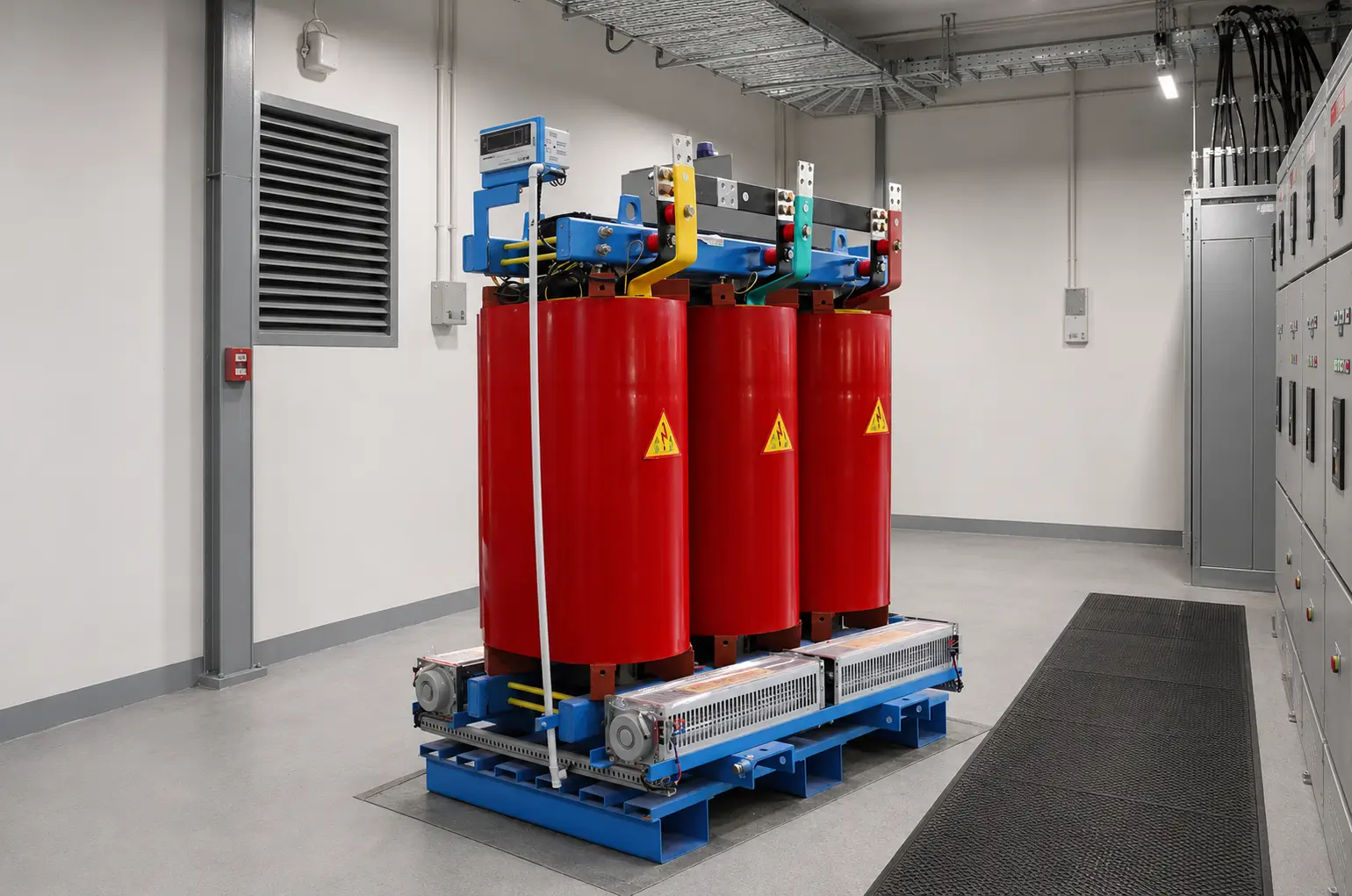
Cast resin transformers commonly use air natural cooling. Forced-air fans can increase temporary loading capability when the design permits it.
This can help during short demand peaks, maintenance of a parallel transformer, facility expansion, or transfer between redundant power paths. Forced-air cooling should not be treated as unlimited permanent capacity; fan redundancy, room ventilation, alarms, and temperature limits must be considered.
N+1 and 2N systems often operate transformers below full rating so that remaining units can support the load after a failure or during maintenance. Capacity should therefore reflect the redundancy strategy, expected load growth, ambient temperature, and required availability.
Temperature Monitoring and Protection
Continuous temperature monitoring is essential because excessive winding temperature accelerates insulation aging.
ZHONGSHAO dry-type transformers can be equipped with BWDK series temperature-control devices. Sensors in the low-voltage windings monitor each phase and can provide display, fan control, over-temperature alarm, and trip signals.
Temperature data can reveal overload, blocked ventilation, fan failure, phase imbalance, or abnormal harmonic heating before a shutdown occurs.
Choosing the Right ZHONGSHAO SC(B) Series
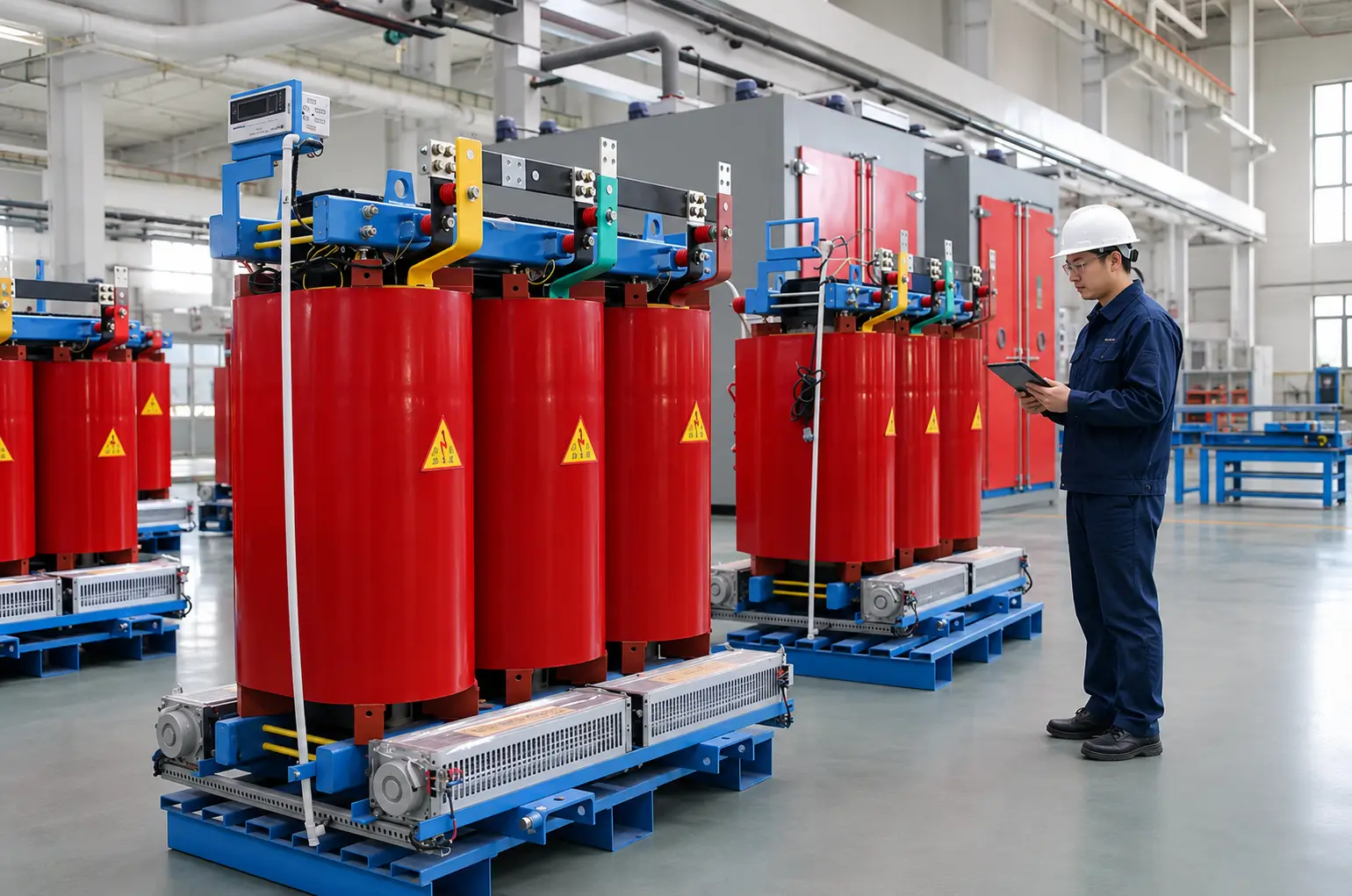
ZHONGSHAO provides SC(B) cast resin dry-type transformers for data centers, commercial buildings, hospitals, industrial facilities, and other indoor locations with strict fire-safety requirements.
Common selection directions include:
- SCB10: practical for standard indoor distribution
- SCB12: suitable where reduced losses and energy performance are priorities
- SCB13 and SCB14: suitable for newer high-efficiency projects with optimized thermal or acoustic requirements
- Custom SC(B) designs: available for project-specific capacity, voltage, cooling, enclosure, impedance, and monitoring
Possible voltage classes include 10kV, 20kV, and 35kV systems, with low-voltage outputs such as 400V or project-specific values. Exact capacity, losses, noise, fire class, partial-discharge limits, and certification must be confirmed for the selected model.
Information Required for Selection
To prepare an accurate proposal, provide:
- Capacity and redundancy arrangement
- Primary and secondary voltage
- Frequency, vector group, and grounding method
- UPS harmonic data and expected load profile
- Required impedance and fault level
- Ambient temperature, altitude, and humidity
- Enclosure, ventilation, noise, and monitoring requirements
A single-line diagram, UPS datasheets, short-circuit study, harmonic report, room layout, and expansion plan will improve selection accuracy.
Final Thoughts
Cast resin dry-type transformers are widely used in modern data centers because they combine oil-free fire safety, compact indoor installation, moisture resistance, lower maintenance, controllable noise, and strong monitoring capability.
Their ability to be installed near the load can reduce low-voltage feeder losses and improve distribution efficiency. When properly designed for UPS harmonics, temperature rise, redundancy, and future growth, they provide a reliable solution for 24/7 digital infrastructure.
ZHONGSHAO SC(B) dry-type transformers can be customized according to capacity, voltage, cooling, enclosure, impedance, protection, and monitoring requirements. Provide the engineering team with your single-line diagram, load profile, UPS data, site conditions, and redundancy plan to receive a project-specific transformer proposal and quotation.