Choosing the correct transformer capacity is essential to industrial power reliability. An undersized transformer may overheat, suffer voltage drop, trip during motor starting, and age prematurely. An oversized unit may increase purchase cost and no-load losses.
Reliable transformer sizing should consider connected load, demand factor, power factor, operating load ratio, motor starting, harmonics, future expansion, and environmental conditions. This guide explains the main calculation methods and shows how to match the result with suitable ZHONGSHAO transformer solutions.
What Does Transformer Capacity Mean?
Transformer capacity is expressed in kilovolt-amperes, or kVA. Kilowatts represent active power, while kVA represents apparent power and includes the effect of power factor.
The basic relationship is:
Transformer capacity (kVA) = Active load (kW) ÷ Power factor
For example, a 160 kW load operating at a power factor of 0.8 requires:
160 ÷ 0.8 = 200 kVA
This is only the starting value. The final rating must also allow for load diversity, continuous loading limits, starting current, future expansion, and site conditions.
Step 1: Calculate the Total Connected Load
List all electrical loads, including production machines, motors, pumps, compressors, welding equipment, ventilation, HVAC, lighting, office equipment, UPS systems, variable frequency drives, and EV chargers.
Add the rated power of all connected equipment. Because not every device normally operates at full load simultaneously, a demand factor may be applied.
Consider a manufacturing facility with the following loads:
| Equipment group | Rated power |
|---|---|
| Main CNC production line | 150 kW |
| Ventilation and lighting | 20 kW |
| Office air conditioning and IT | 10 kW |
| Total connected load | 180 kW |
Using a preliminary demand factor of 0.7:
Calculated active load = 180 × 0.7 = 126 kW
Assuming a power factor of 0.8:
Apparent power = 126 ÷ 0.8 = 157.5 kVA
A demand factor of 0.7 may be suitable for preliminary calculations in general manufacturing, but it is not universal. A data center or continuous-process plant may require a factor closer to 0.9 or 1.0.
Step 2: Apply the 80% Load Rule
A transformer should not normally operate continuously at 100% of its rating. Long-term full-load operation increases temperature and may shorten insulation life.
The load ratio is:
β = S ÷ Se
Where:
- S is the calculated load in kVA
- Se is the transformer rated capacity in kVA
- β is the expected load ratio
For industrial operation, a target load ratio of approximately 70% to 80% is commonly preferred.
Using the previous result:
Required rating = 157.5 ÷ 0.8 = 196.9 kVA
A 200 kVA transformer is the theoretical minimum. A 250 kVA transformer may be more suitable if the facility has large motors, frequent load variation, continuous operation, or planned expansion.
Common standard ratings include 50, 63, 100, 160, 200, 250, 315, 400, 500, 630, 800, 1000, 1250, 1600, 2000, and 2500 kVA. Always round the calculated result up rather than down.
Step 3: Calculate kVA from Voltage and Current
When the design current is known, use these formulas.
For a single-phase system:
kVA = Voltage × Current ÷ 1000
For a three-phase system:
kVA = √3 × Line Voltage × Line Current ÷ 1000
For example, a three-phase 400 V load drawing 360 A requires:
1.732 × 400 × 360 ÷ 1000 = 249.4 kVA
A 250 kVA unit may appear sufficient, but a larger rating may still be needed after considering continuous loading, motor starting, harmonics, and future growth.
Step 4: Check Unbalanced Three-Phase Loads
Industrial facilities may have uneven loading across phases, especially when many single-phase loads are connected.
Calculate the load on phases A, B, and C separately. Use the highest phase load, multiply it by three, and then apply power factor and loading margin.
| Phase | Active load |
|---|---|
| A | 10 kW |
| B | 9 kW |
| C | 11 kW |
The highest phase load is 11 kW:
Equivalent three-phase load = 11 × 3 = 33 kW
At a power factor of 0.8:
33 ÷ 0.8 = 41.25 kVA
At an 80% operating ratio:
41.25 ÷ 0.8 = 51.6 kVA
The next suitable standard rating is 63 kVA. Using the average phase load instead of the highest phase may underestimate the required capacity.
Step 5: Consider Expansion, Motors, and Harmonics
Industrial facilities often add machinery, cooling equipment, automation systems, or charging equipment. A margin of approximately 20% to 30% may be considered after the realistic maximum load has been established.
Do not apply every margin mechanically. Demand factor, the 80% rule, motor allowance, and future growth should be reviewed together to avoid unnecessary oversizing.
Large motors may draw several times their rated current during startup. Review the starting method, allowable voltage drop, starting frequency, and whether several motors start together.
Variable frequency drives, UPS systems, rectifiers, welding machines, data center equipment, and EV chargers can generate harmonics. High harmonic levels may require extra capacity, special winding arrangements, harmonic analysis, or a K-rated transformer.
Step 6: Apply Environmental Derating
Transformer nameplate capacity assumes specified operating conditions. Effective capacity may need to be reduced when the installation has:
- Ambient temperature above 40°C
- Altitude above 1000 meters
- Poor ventilation
- Heavy dust, humidity, or corrosion
- Strong harmonic content
High altitude reduces air density and cooling performance, while high ambient temperature limits heat dissipation. Dry-type transformers depend heavily on ventilation, and oil-immersed units need sufficient radiator clearance.
The final derating factor should be confirmed by the manufacturer according to the applicable IEC, ANSI, IEEE, or local standard.
Choosing the Right ZHONGSHAO Transformer
Capacity is only one part of selection. Installation environment, fire safety, voltage level, cooling method, and deployment requirements also matter.
S13-M Oil-Immersed Transformer
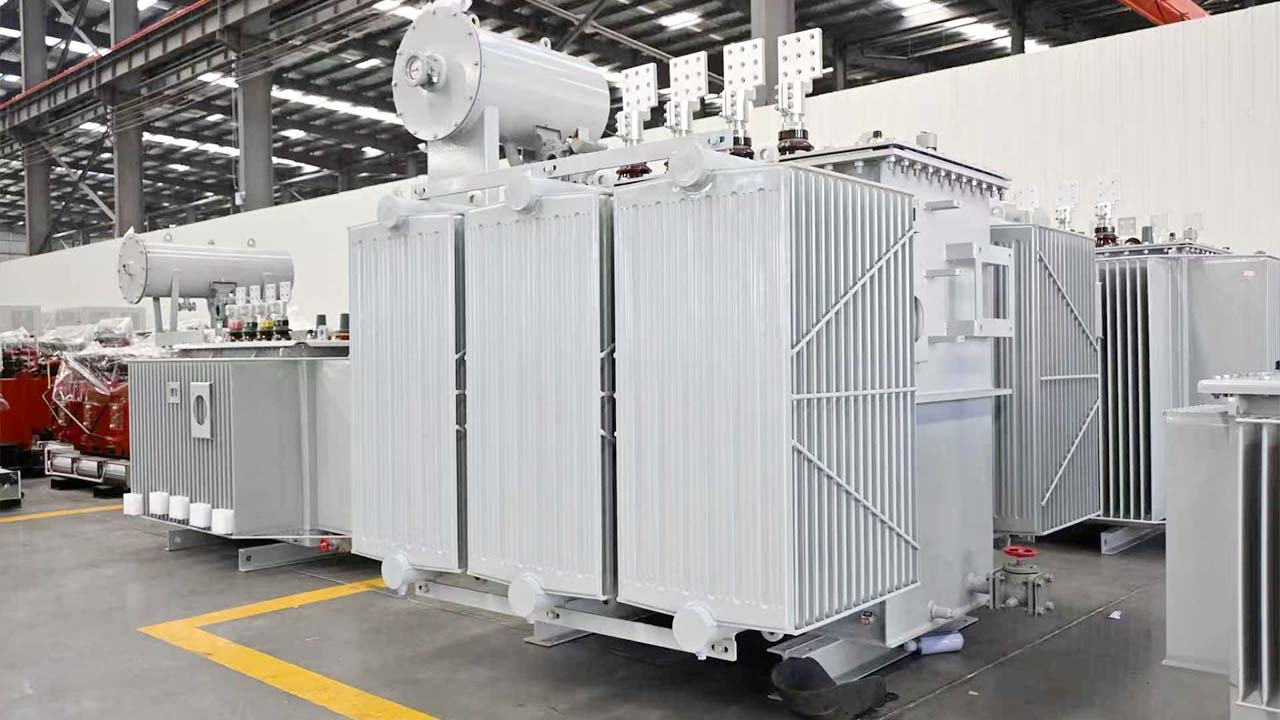
ZHONGSHAO’s S13-M fully sealed oil-immersed transformer is suitable for factories, outdoor substations, and industrial distribution systems. It offers low losses, low noise, strong cooling performance, and reduced routine maintenance.
For the manufacturing example calculated at 196.9 kVA, a 250 kVA S13-M transformer provides practical reserve capacity for industrial operating conditions.
10kV and 35kV Oil-Immersed Transformers
ZHONGSHAO supplies medium-voltage oil-immersed transformers for factories, mines, petrochemical facilities, renewable energy plants, and utility projects.
The 10kV S11 and S13 series suit many industrial loads, while higher-capacity 35kV solutions can serve large industrial and mining projects.
SC(B) Cast Resin Dry-Type Transformer
For indoor installations or strict fire-safety requirements, ZHONGSHAO’s SC(B) cast resin dry-type transformer is a suitable choice.
Typical applications include data centers, food and pharmaceutical plants, hospitals, indoor factories, clean rooms, and commercial buildings.
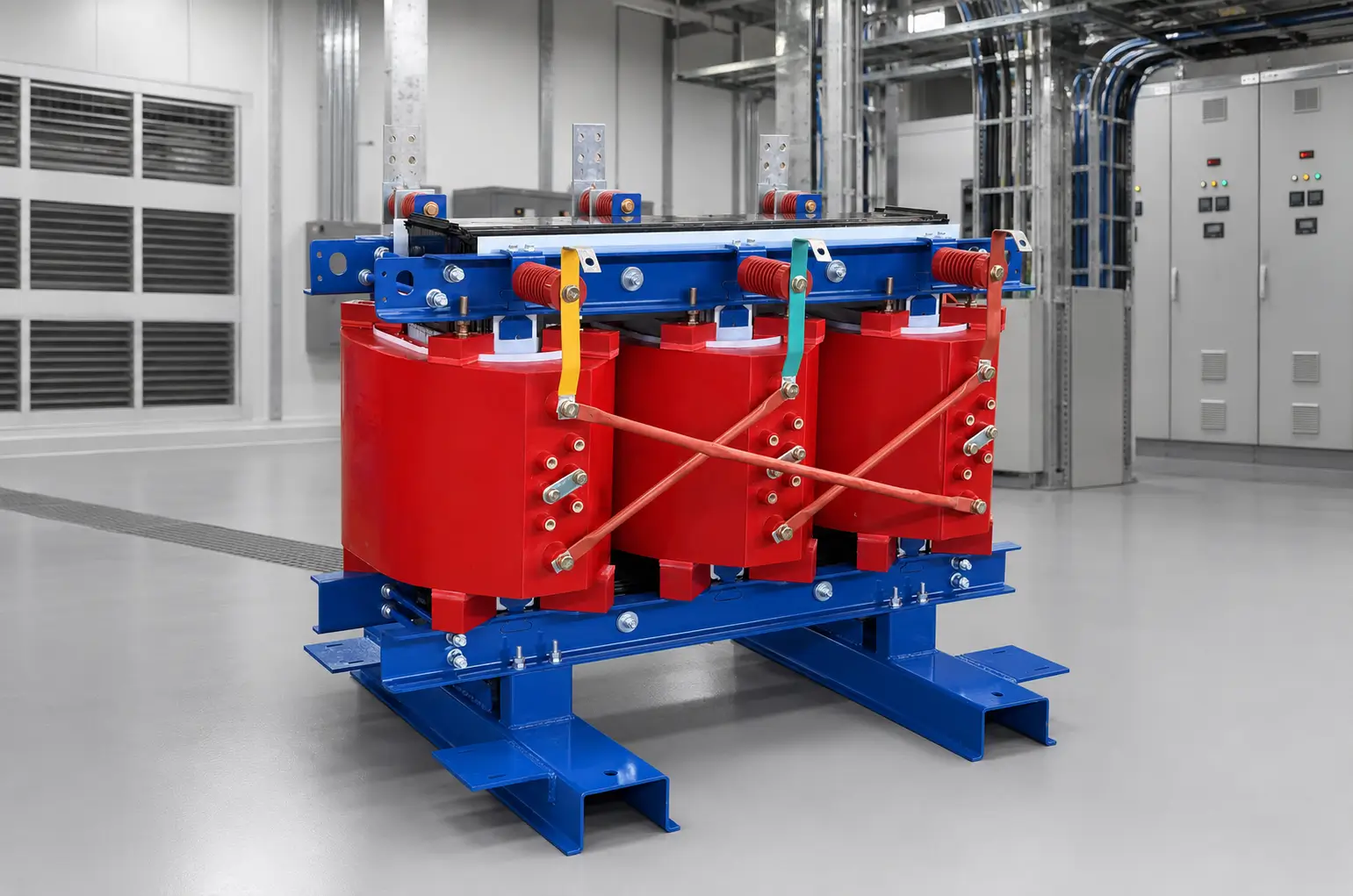
Its oil-free epoxy resin insulation provides flame resistance and reduces oil-related maintenance. IP23 or IP44 enclosures may be specified according to dust and moisture conditions.
ZGS11-12 and HYB Box Substations
Facilities requiring compact and rapid deployment may use an integrated box substation.
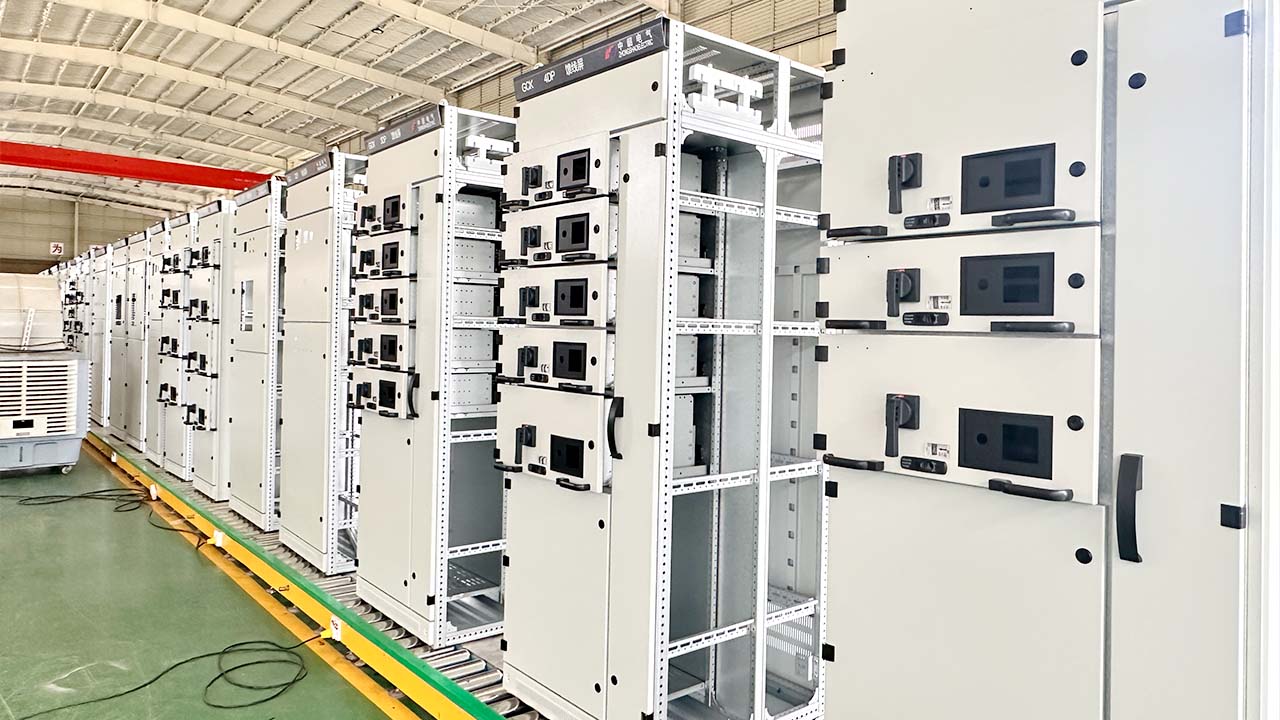
The ZGS11-12 American-style box substation combines the transformer, switchgear, and protection devices in one enclosure. It is suitable for temporary power, remote mining sites, industrial parks, and renewable energy projects.
The HYB prefabricated substation supports higher-capacity wind and solar applications.
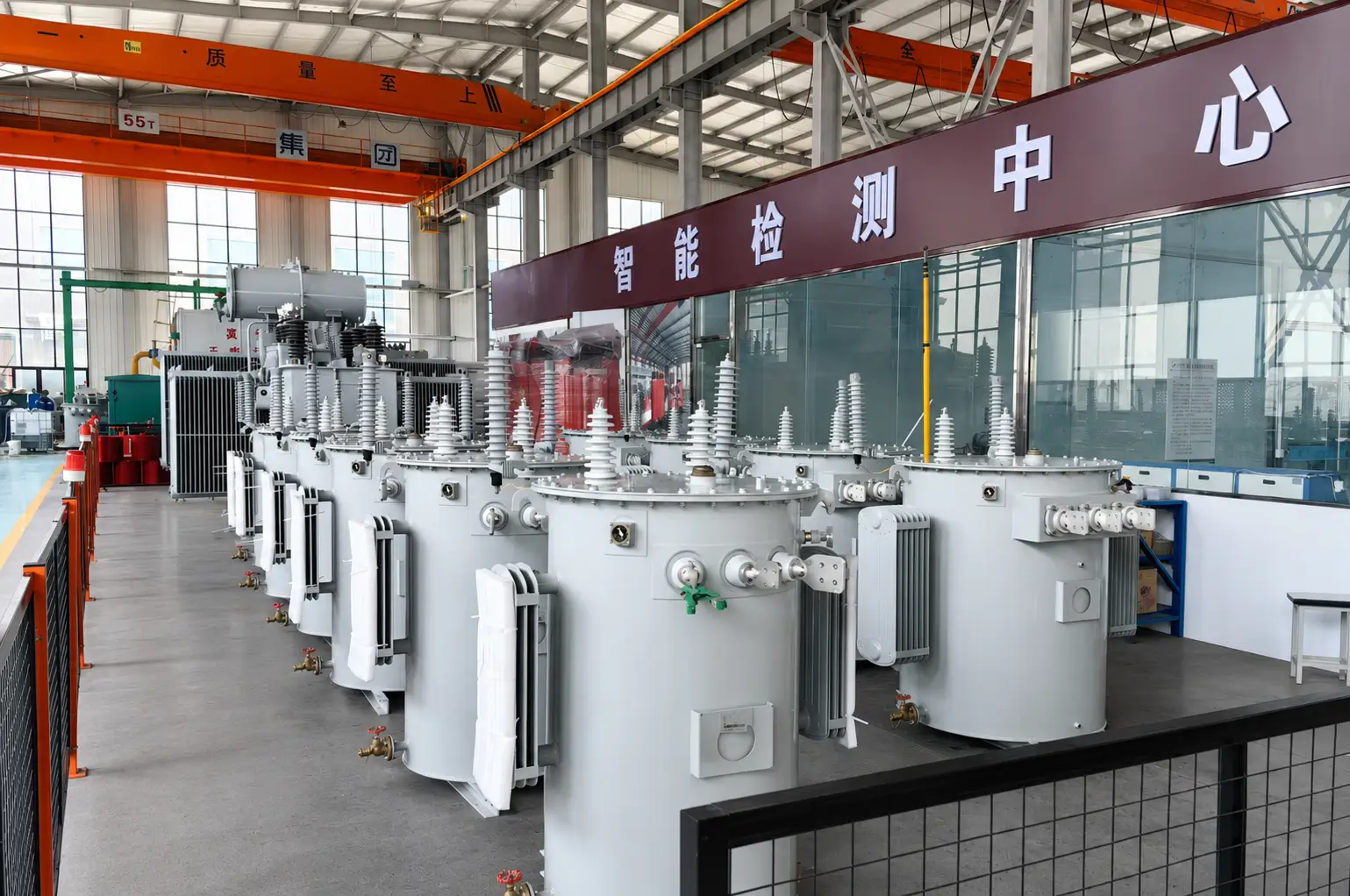
Specifications to Confirm Before Ordering
An accurate quotation should include:
- Required capacity in kVA
- Primary and secondary voltage
- Frequency and phase
- Power factor and load profile
- Motor and nonlinear load details
- Indoor or outdoor installation
- Ambient temperature and altitude
- Vector group and impedance
- Tap range and cooling method
- Enclosure rating
- Applicable standards
- Quantity and delivery location
A single-line diagram helps the engineering team review voltage levels, protection coordination, transformer quantity, and possible parallel operation.
ZHONGSHAO provides oil-immersed, dry-type, three-phase, pad-mounted, and prefabricated transformer solutions. Applicable products can be supplied according to IEC, ANSI, IEEE, UL, CE, CCC, ISO, and project-specific requirements.
FAQ
How do I choose the demand factor?
The demand factor depends on how many loads operate simultaneously. A preliminary value around 0.7 may be used for general manufacturing, while continuous-process facilities may require 0.9 to 1.0.
Should I always add 20% to 30%?
No. The margin should reflect future growth, motor starting, load fluctuation, and reliability requirements. Avoid counting the same allowance more than once.
What if the result falls between standard ratings?
Round up to the next suitable rating. Review continuous loading, starting current, harmonics, and future expansion before making the final choice.
Can ZHONGSHAO provide customized capacities?
Yes. ZHONGSHAO can customize capacity, voltage, winding material, cooling method, enclosure, vector group, impedance, and other specifications.
Final Thoughts
Calculating transformer capacity requires more than adding equipment nameplate ratings. A reliable design must account for demand factor, power factor, continuous load ratio, motor starting, harmonics, environmental derating, and future expansion.
Begin with the realistic operating load, convert kW to kVA, apply an appropriate load ratio, and round up to a standard capacity. Then select the transformer type according to the installation conditions and safety requirements.
For outdoor industrial facilities, ZHONGSHAO’s S13-M and other oil-immersed transformers provide strong cooling and reliable operation. For indoor or fire-sensitive installations, the SC(B) cast resin dry-type transformer offers an oil-free solution. For rapid deployment, ZGS11-12 and HYB box substations integrate transformation, switching, and protection into one compact system.
Providing complete load data and a single-line diagram allows ZHONGSHAO’s engineering team to recommend a safe, accurate, and cost-effective transformer solution.