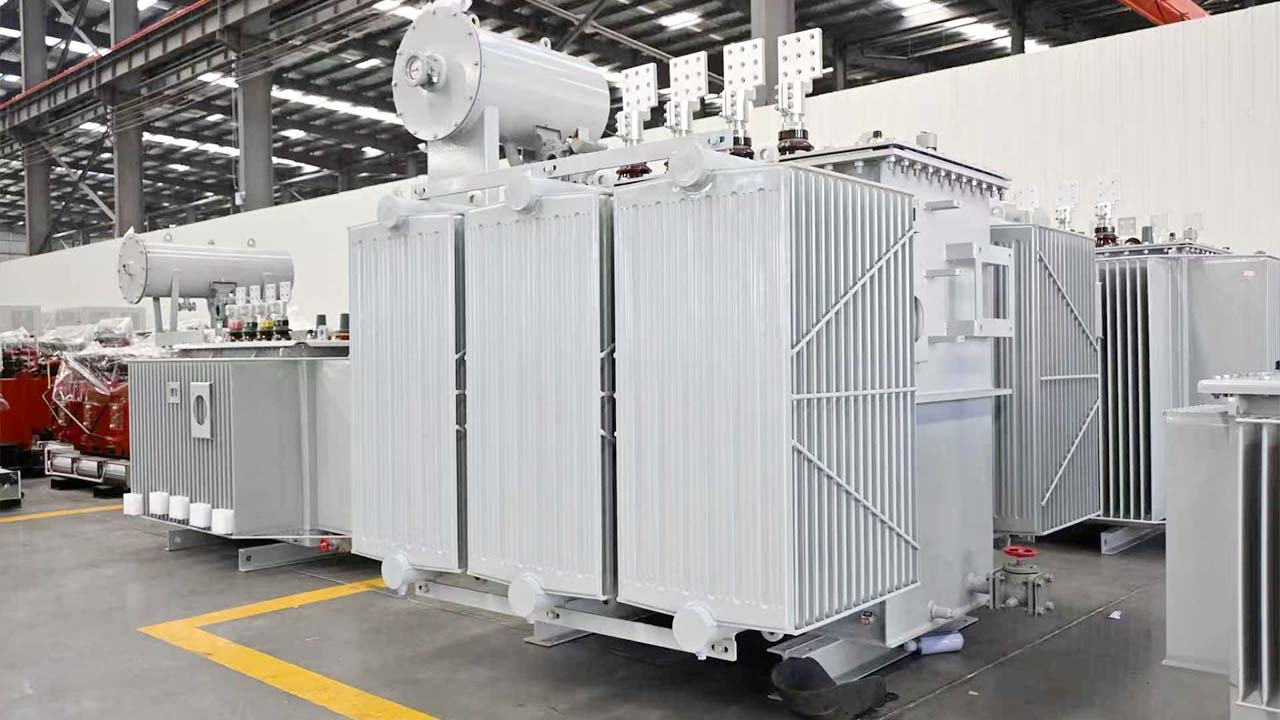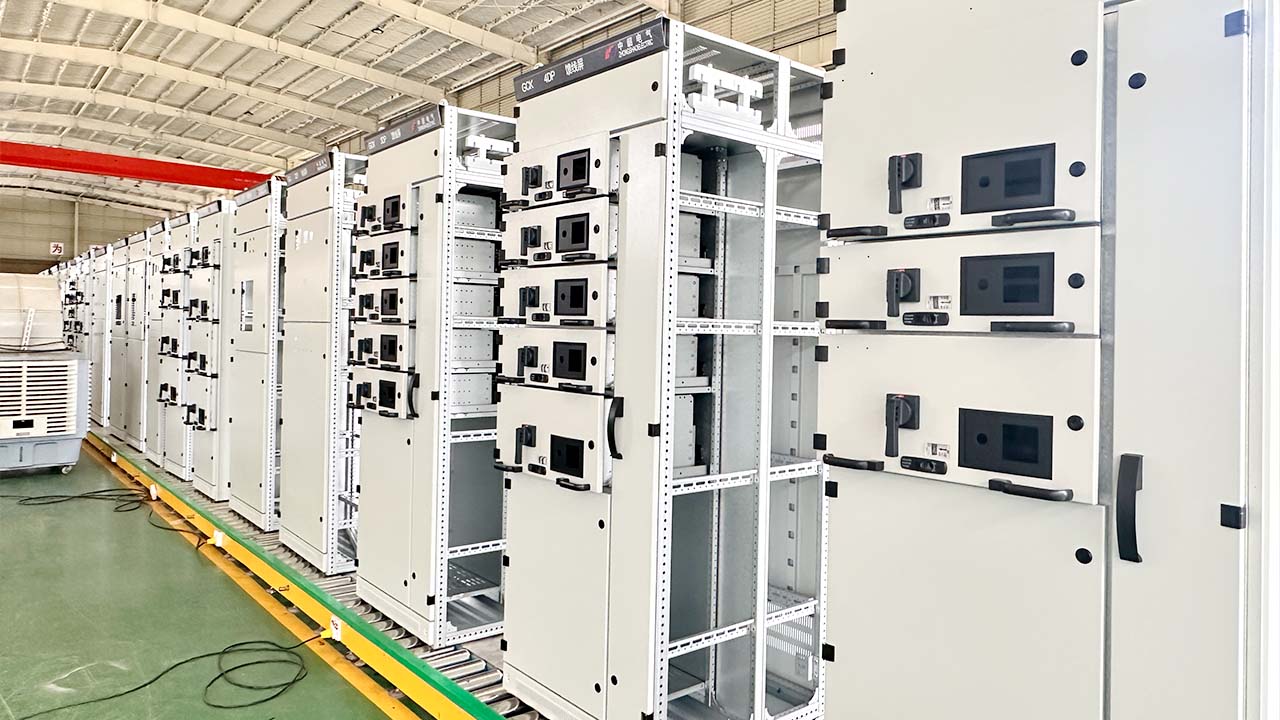
In production projects, excessively high and low voltage can affect the lifespan and efficiency of your equipment. Transformers let you adjust voltage to fit whatever you need.
This article will let you know the differences and practical applications of step-up and step-down transformers in an intuitive way, allowing you to make the wisest choice.
What is a Step-Up Transformer
A step-up transformer boosts voltage from low to high. And it’s made up of a primary winding, a secondary winding, and an iron core.
In a power system, electrical energy is usually output at a lower voltage from the generator. And it plays a role in long-range transmission, which promotes the whole system’s efficiency.
Working Principle of Step-Up Transformer
As per Faraday’s law of electromagnetic induction, the voltage is proportional to the number of turns. When an AC voltage is supplied to the primary winding, a magnetic field is present around the iron core, and it induces a voltage in the secondary winding at the same time.
Since the secondary winding contains more turns than the primary winding, the secondary output voltage is higher than the input voltage.
What is a Step-Down Transformer
On the other hand, a step-down transformer can convert high voltage to a lower voltage. Before electrical energy enters factories, commercial facilities, or equipment, it must be reduced to a safe and usable level by a step-down transformer to ensure the stable operation of your equipment.
Working Principle of Step-Down Transformer
It also works on the principle of electromagnetic induction. When you run alternating current through the primary winding, it makes a changing magnetic field inside the iron core. That magnetic field then pushes a voltage into the secondary winding.
Here’s the thing: the primary winding has more turns than the secondary, so the voltage that comes out on the secondary side ends up lower than what you put in. Consequently, the output current increases, which can provide a stable power supply for your appliances and other devices.
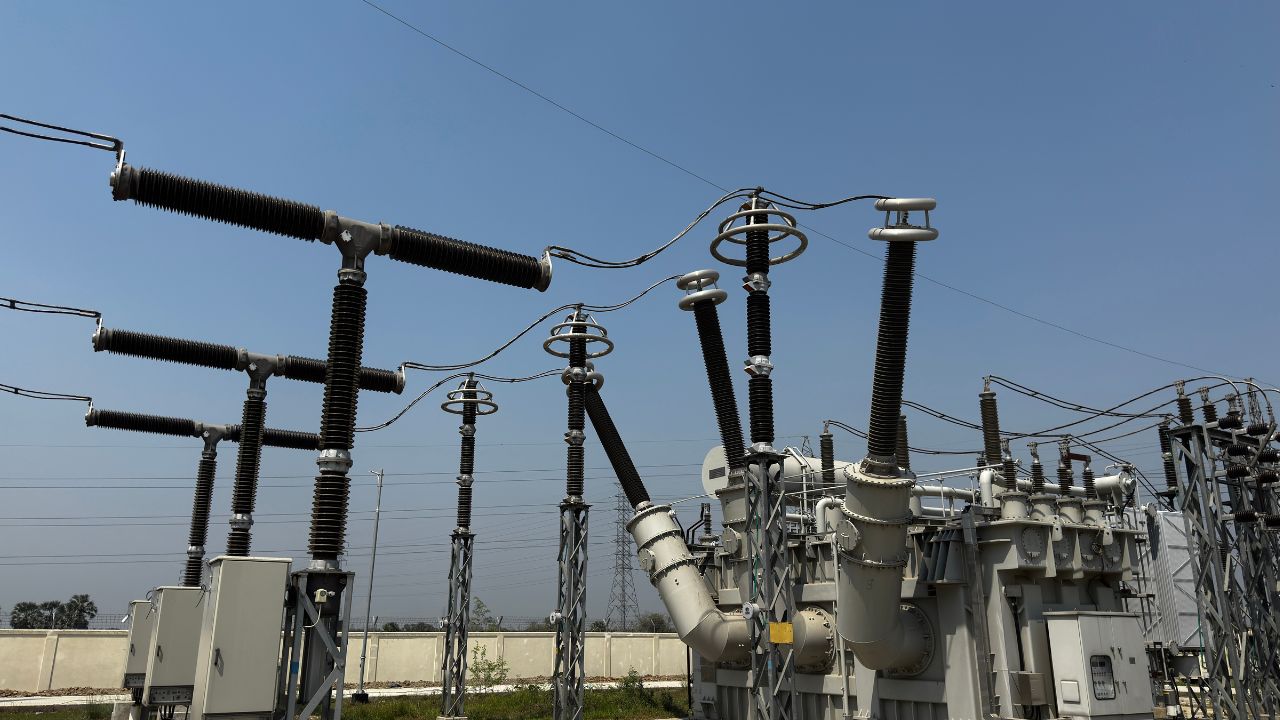
Step-Up vs Step-Down Transformers: The Key Differences
Voltage Transformation
This voltage difference is what sets step-up and step-down transformers apart.
Step-Up Transformer: A step-up transformer does exactly what it sounds like—it takes a lower voltage and cranks it up, which is great for sending electricity over long distances.
Step-Down Transformer: On the contrary, the step-down one brings high or medium voltages down to levels you can directly use at home or at work. That’s how your devices get the right amount of power.
Current Conversion
Ideally, the input power and output power of a transformer are basically equal. According to the formula P=UI, voltage and current are inversely proportional.
Step-Up Transformer: When you use it, you can obtain a higher voltage and lower current. This matters for long-distance power lines—less current means wires heat up less, so you don’t have to worry as much about cooling cables or spending extra on heavy-duty materials.
Step-Down Transformer: But this type does the opposite. It drops the voltage and bumps up the current so your equipment gets the power it needs. Therefore, on the step-down side, the wires are often thicker, and their heat dissipation requirements are also higher.
Winding Configuration and Turns
Step-Up Transformer: The low-voltage primary winding and high-voltage secondary winding make up the step-up transformer. And it features a greater number of turns in the secondary winding than in the primary winding. The former is usually several times or even about ten times that of the primary winding.
Thus, the number of turns on the secondary winding to that on the primary winding is wildly beyond 1. Moreover, as per electromagnetic induction, the higher the number of turns, the higher the voltage output you get.
Step-Down Transformer: However, its primary winding is high-voltage and secondary winding is low-voltage, with more turns in the primary and fewer in the secondary. As the high voltage is concentrated on the primary side, you need to focus on its insulation and safety design.
Efficiency and Losses
Transformer efficiency is mainly affected by no-load losses and load losses.
Step-Up Transformer: It operates at critical nodes in the power grid, with long operating times and stable loads. By increasing the voltage, it can dramatically reduce transmission current. Thus, it decrease I²R losses in the line and improves the transmission efficiency.
More importantly, step-up transformers made of high-quality silicon steel sheets can better reduce no-load losses.
Step-Down Transformer: Due to its larger current, the step-down transformer experiences greater load fluctuations, and it also has higher requirements for winding conductivity and heat dissipation design. Otherwise, losses will increase.
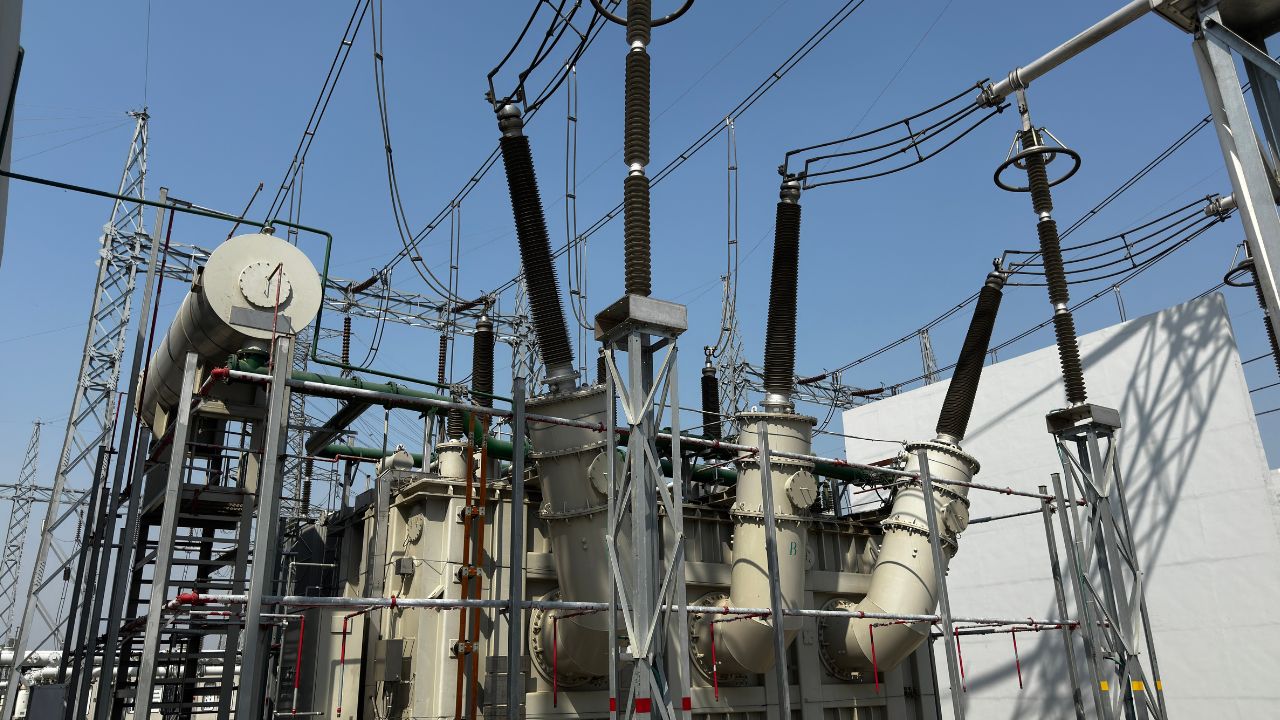
Short Circuit Impedance
Short-circuit impedance is a parameter that measures the ability to limit current when a short-circuit fault occurs.
Step-Up Transformer: This type of transformer is usually designed with high short-circuit impedance to effectively limit short-circuit current and protect the transmission system and upstream equipment. In ultra-high voltage systems, uncontrolled short-circuit current will bring extremely serious consequences.
Step-Down Transformer: In contrast, it often adopts a relatively low short-circuit impedance to output a stable voltage on the load side and prevent great voltage drops when you start high-power equipment.
Footprint
When planning a project, you should consider the transformer’s footprint and installation conditions in advance to avoid rework and additional costs later.
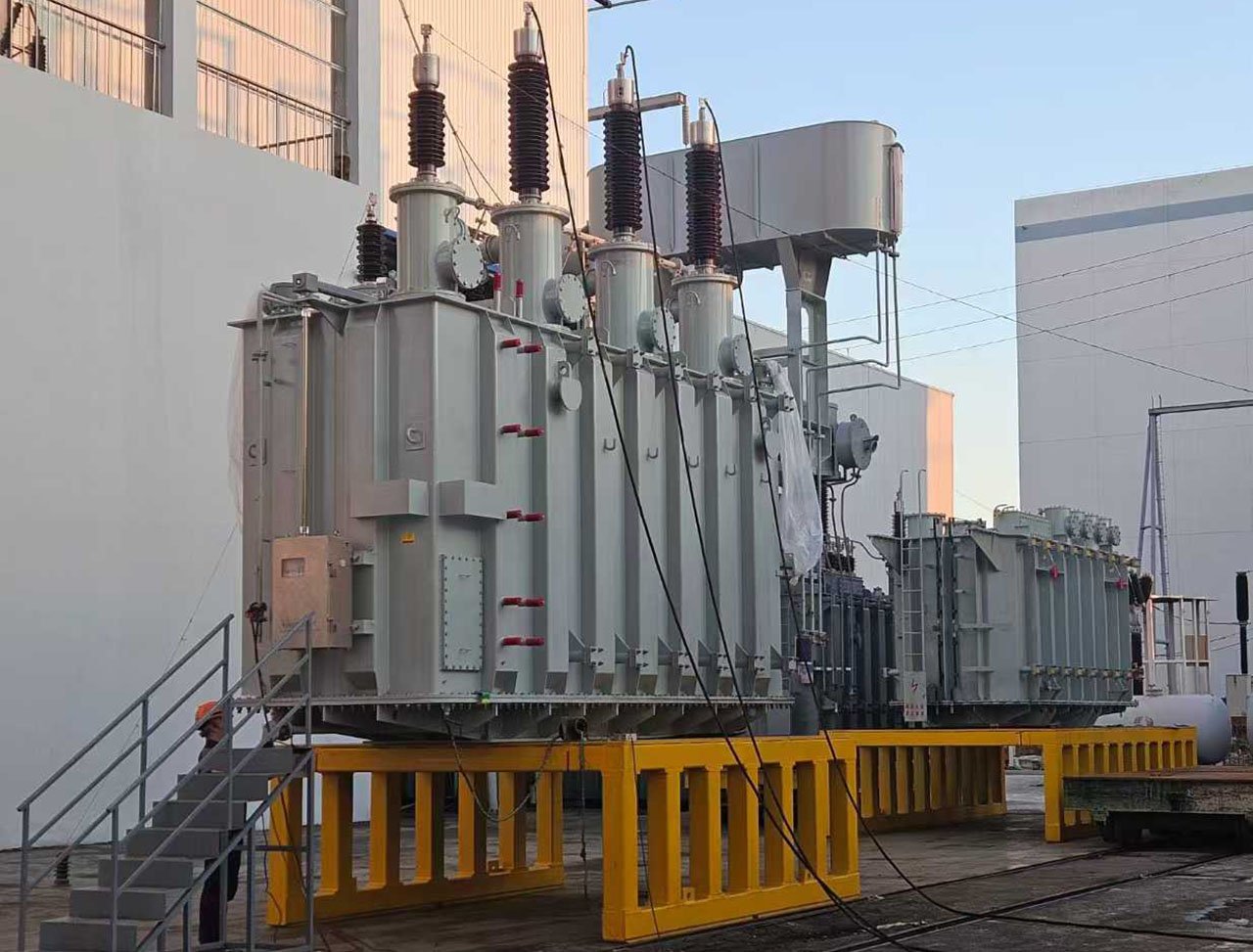
Step-Up Transformer: Because it involves higher voltage levels, the high-voltage side usually requires a greater insulation distance, so its overall floorprint will be larger. Furthermore, its volume is approximately 20-30% larger than that of a step-down transformer, which means you need to leave more space for it.
Step-Down Transformer: It has a relatively low voltage level and a compact structure. You can flexibly install it inside the factory, next to the equipment, or in the distribution room.
Capacity
Transformer capacity is typically specified in kVA/MVA.
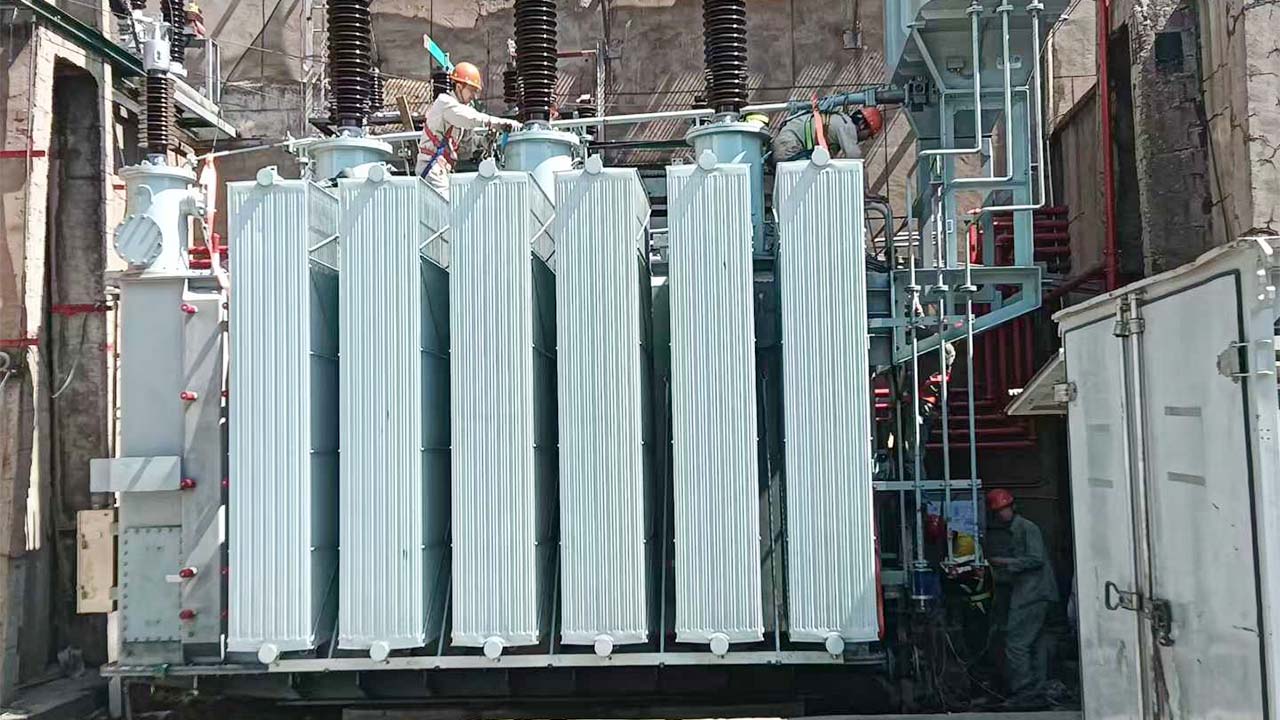
Step-Up Transformer: It usually serves as the core of the power system, with generally large capacities ranging from several MVA to hundreds of MVA, commonly used for centralized power generation and large-scale power transmission.
Step-Down Transformer: This type has a wider capacity range, from control transformers of tens of VA to industrial distribution transformers of several MVA, almost covering all terminal power consumption scenarios.
Cost
Step-Up Transformer: Generally, its unit price is significantly higher than that of a step-down transformer. This is because its manufacturing process is very complicated, and the insulation requirements for materials are higher. And the transportation and maintenance costs are also higher.
Step-Down Transformer: It has wider applications and higher cost performance with a compact structure. However, when purchasing, you should not just look at the price tag but for considering operating efficiency, repair expenses, and service life.
Application
Step-Up Transformer: It is mainly used in power factories, power grid transmission systems, and new energy power grid connections. And it can improve transmission efficiency and reduce energy loss.
Step-Down Transformer: This transformer is commonly used in industrial power distribution, commercial buildings, electrical equipment, and automation systems, providing safe and stable voltage for terminal loads.
Comparison Table: Step-Up vs Step-Down Transformers
| Aspects | Step-Up Transformers | Step-Down Transformers |
| Voltage Transformation | Low to High | High to Low |
| Current Conversion | High to Low | Low to High |
| Winding Configuration and Turns | Low-voltage primary winding with fewer turns, high-voltage secondary winding with more turns | High-voltage primary winding with more turns, low-voltage secondary winding with fewer turns |
| Efficiency and Losses | High efficiency | Low copper loss |
| Short Circuit Impedance | Higher | Lower |
| Footprint | Larger | Wide range |
| Capacity | Very high | Medium |
| Cost | Higher | Lower |
| Application | Power plants, high-distance power transmission, and new energy | Substations, residential areas, equipment |
FAQ
Can a transformer be used as both a step-up transformer and a step-down transformer?
Yes. This can be realized by exchanging the input and output terminals, but this is not recommended.
Because efficiency is often lower when running in reverse, overheating and energy loss are likely to occur. Moreover, the original insulation class, cooling structure, and winding design may not accommodate reverse current, which will accelerate component aging and even cause malfunctions.
How to choose the right transformer?
First, you should determine the input and output voltages and required capacity of the equipment to guarantee it complies with your actual load. You also need to select between dry-type and oil-immersed transformers to match your application scenario. Meanwhile, the energy efficiency grade of the equipment is also important. Energy-saving models can cut your energy expenses.
How to maintain a transformer?
You should monitor the transformer’s temperature, noise, and odor, and solve any problems promptly. Also, clean the radiator periodically and ensure that wiring is secure and insulation is in good condition. For oil-immersed transformers, checking the oil level and oil quality is needed.
Can a step-down transformer save electricity?
A step-down transformer cannot directly save electricity, but you can improve the equipment efficiency by matching it with the appropriate voltage. When equipment operates at or near its rated voltage, current loss and heat generation are lower, thus decreasing energy use.
Final Thoughts
Step-up transformers are suitable for long-distance power transmission. A step-down transformer can ensure the stable operation of your terminal equipment.
Zhongshao’s transformer can deliver stable voltage conversion over a long time, ensuring reliable power distribution for your industrial applications. If you have any design ideas for transformers, please contact us to further discuss the details of the solution.