
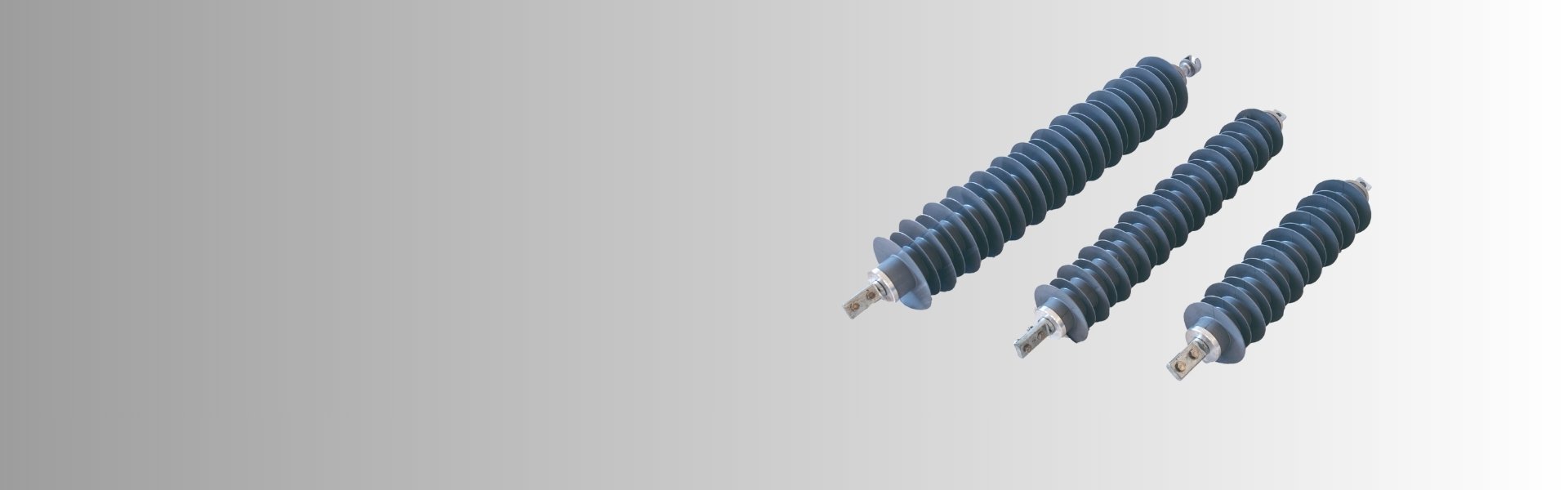
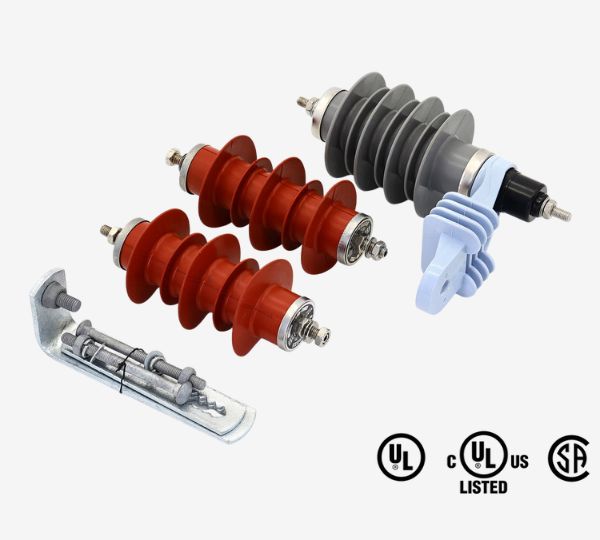
Features of Lightning Arrester
- Quickly guide lightning and chain surges to the ground to protect external distribution boards and electrical equipment.
- We offer a variety of lightning arrester models to meet the diverse needs of residential, commercial, and industrial applications.
- Zhongshao is produced in accordance with international safety standards, featuring stable lightning protection performance and more controllable quality.
- Professional teams can integrate grounding and surge protection systems to create a complete lightning protection solution.
- By adopting advanced technology and strict quality inspection, we ensure that the lightning arrester is durable, reliable, and has a longer service life.
Lightning Arrester Manufacturer in China
Although the structure of a lightning arrester is simple, it plays a crucial role in an electrical system. It can quickly direct sudden lightning surges to the ground, protecting your valuable equipment and ensuring personal safety at the same time.
As a professional supplier of lightning arresters, Zhongshao has been dedicated to the research and development and production of electrical protection products for many years. It adheres to strict testing and high-standard manufacturing, providing reliable and durable lightning protection solutions for customers worldwide. We not only supply products, but also can match more suitable lightning protection solutions for you according to different application scenarios. If you need it, please contact us immediately.
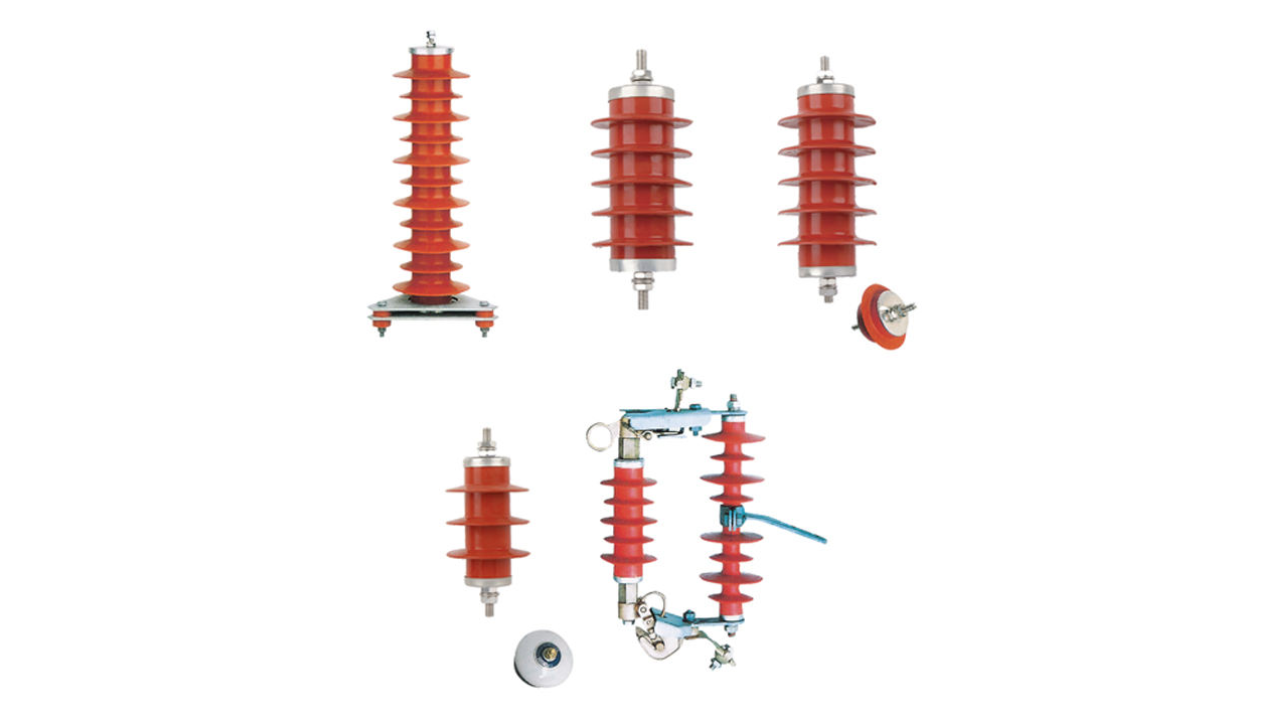
These arresters fulfill the especially high electrical and mechanical requirements for use in traction systems.
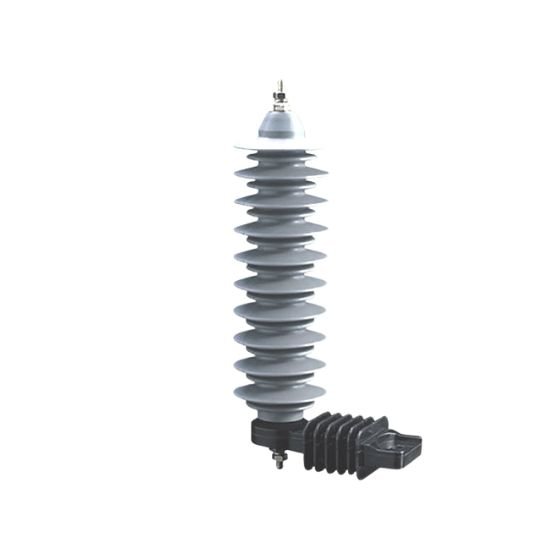
Excellent voltage-ampere characteristics and high discharge capability, providing very consistent protection.
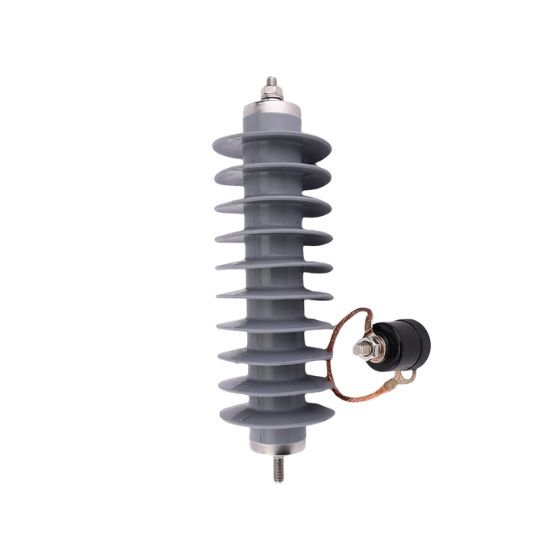
Designed to protect transformers, switchgear, and other equipment from switching and lightning surges.
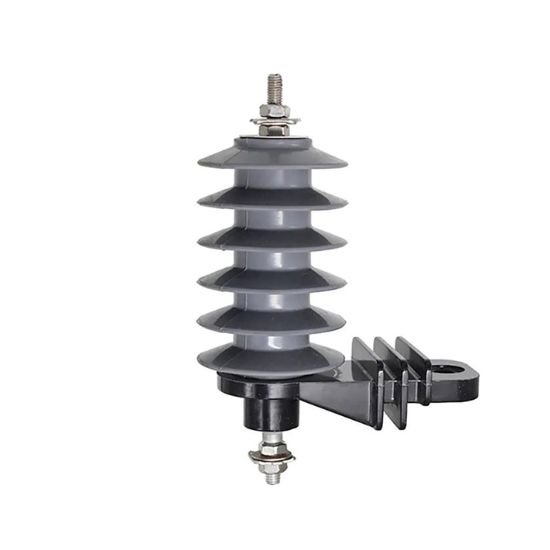
With an 11kV-33kV rated voltage and is made with high quality silicone rubber and zinc oxide.
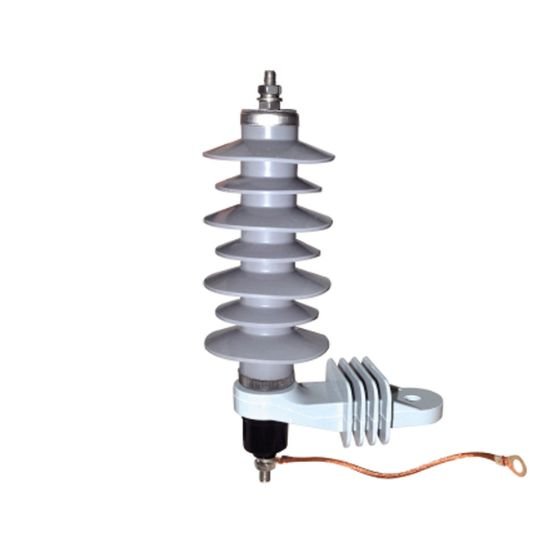
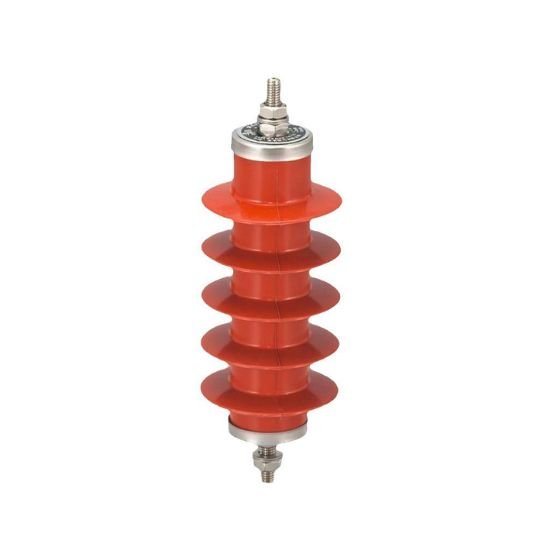
A high quality and long lasting outdoor lightning arrester with a 5kA discharge current and a 15kV rated voltage.
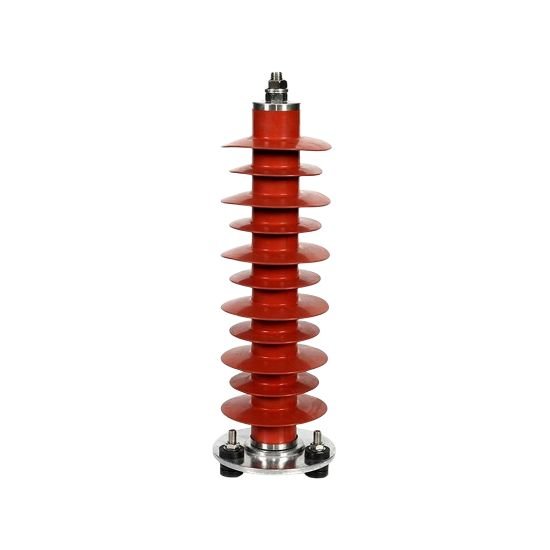
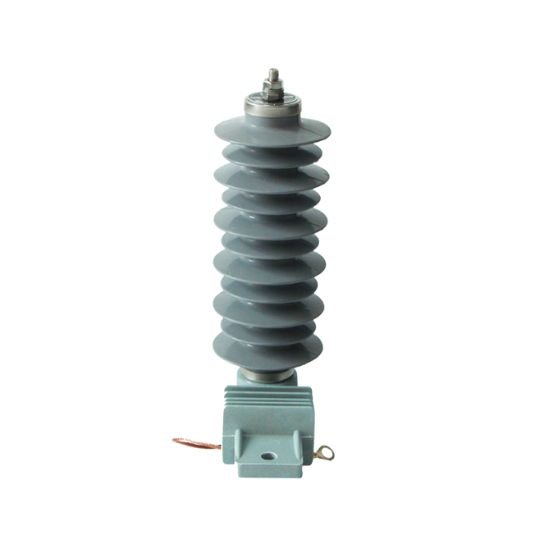
A zinc oxide and silicone rubber material lightning arrester with 27.5kV rated voltage.
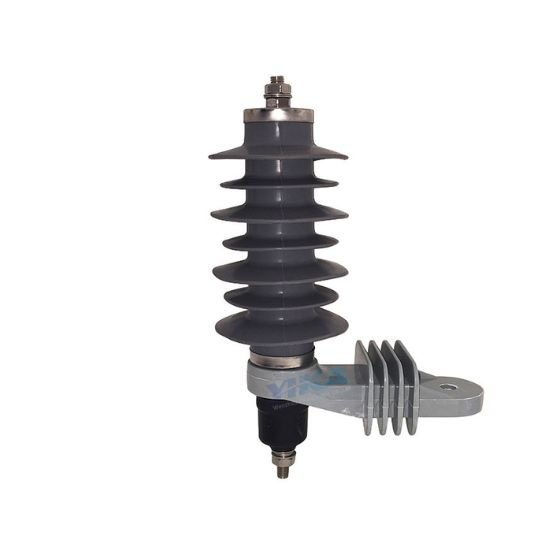
An industrial metal oxide gapless lighting arrester with a 3-66kV rated voltage and a 10kA rated current.
What Is a Lightning Arrester?
Lightning can generate voltage surges in various ways, and what you need is a device that can protect circuits at critical moments – a lightning arrester.
Lightning strikes, sparks or arcs can all bring high voltages and large currents. Lightning arresters will use low-resistance paths to quickly dissipate these dangerous energies into the ground, helping your power system stay away from damage. Lightning arresters are generally made of metals such as copper or aluminium. They rely on grounding paths to disperse lightning energy and are often installed on transmission poles, iron towers or the top of buildings to ensure that the discharge current can be safely released.
Working principle:
- When a surge generated by lightning or a switch travels along the conductor to the lightning arrester, there will be a low-impedance channel between the power line and the ground. It will immediately break through the insulation and discharge along the channel to the ground. Once the voltage drops back to the safe range, the insulation will automatically recover, and the current will immediately stop.
The characteristics of an ideal lightning arrester:
- It is completely non-conductive under normal voltage: It does not leak electricity and does not affect power transmission. Even if the voltage fluctuates slightly, the maximum system voltage cannot be lower than the breakdown voltage.
- Instantaneous response to surges: Whether from overvoltage caused by lightning strikes or from switch operations, the lightning arrester quickly establishes a low-impedance path to ground.
- It can withstand extremely high discharge currents: even under severe surge events, it can prevent system damage and repeatedly perform protection tasks.
- Immediately restore insulation after the surge ends: Once the voltage drops back to a safe range, it will immediately block the subsequent power frequency current, avoiding energy waste and ensuring the system continues to operate stably.
The Characteristics of Lightning Arresters
Structure and Material
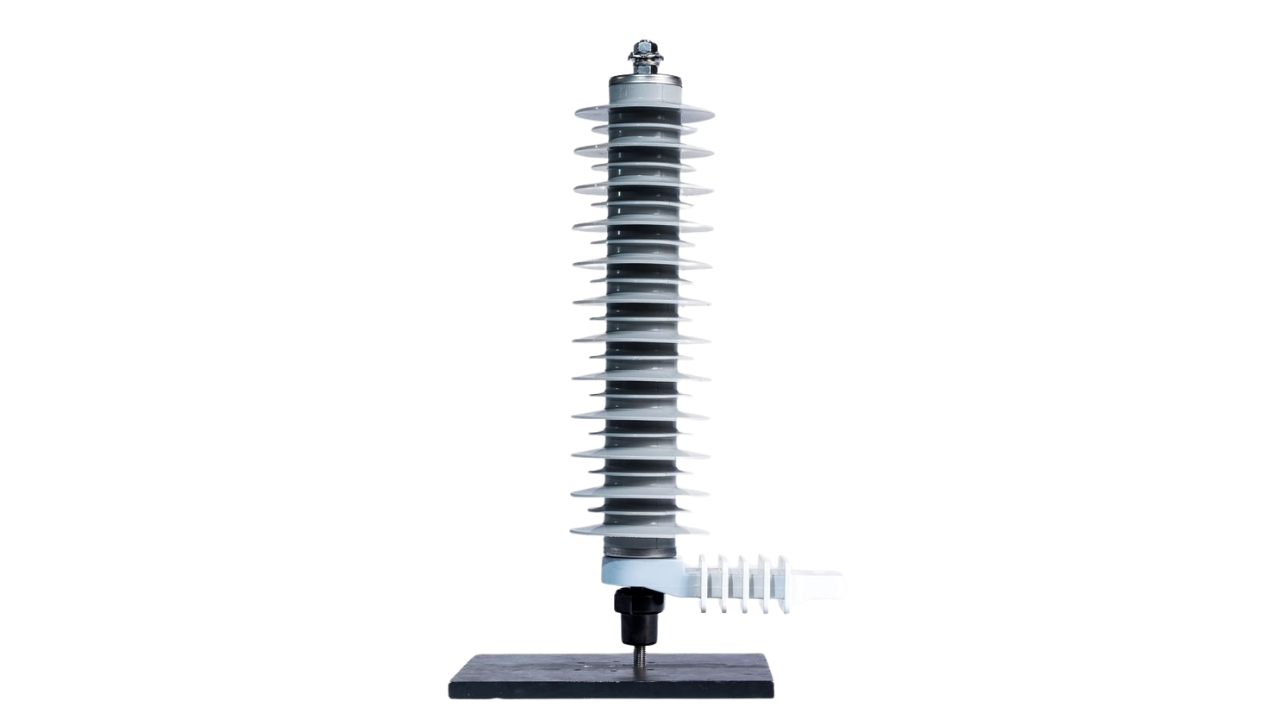
A lightning arrester consists of three parts: the pointed metal rod, the grounding system and the grounding path. The materials are mostly copper, iron, brass or low-carbon steel. These metals have good electrical conductivity and can cover a protective range of approximately 60 meters.
To cope with the huge current caused by lightning strikes, the main body of lightning arresters is mostly made of low-carbon steel and undergoes hot-dip galvanising treatment, which has stronger corrosion resistance and can maintain stable operation for a long time even in outdoor environments.
Installation
To achieve the best effect, lightning arresters are usually installed close to the protected equipment, providing the shortest release path for voltage surges.
In an AC system, it is generally connected between the phase line and the ground line. In a DC system, it is mostly connected between the pole and the ground wire. If your system is ultra-high voltage alternating current, the lightning arrester will focus on protecting the generator, transformer, busbar, line and circuit breaker. In high-voltage direct current systems, key equipment such as converters, valve halls, busbars, and reactors all rely on lightning arresters to block surges.
In practical applications, lightning arresters are often found in the following locations:
- Overhead lines: Installed on transmission towers and utility poles, they protect transmission and distribution lines and prevent power outages and flashover in the event of voltage surges.
- Transformer: It is used to protect the low-voltage coil and ensure that related components are not damaged by surges, so that the transformer can be used continuously for a long time.
- Switchgear: It is installed on some components of a substation to limit overvoltage generated within the substation due to lightning strikes or operations.
- Electric motors and generators: Protect stator windings, bearing housings and cable interfaces.
- Building main service entrance: Prevent lightning strike energy from entering the interior along the power system and protect electrical appliances and wires.
- Communication and data lines: Install at the interface between data cables and telephones to reduce the impact of lightning surges on line equipment.
Maintenance and Testing
Basic Cleaning and Power-off Operations
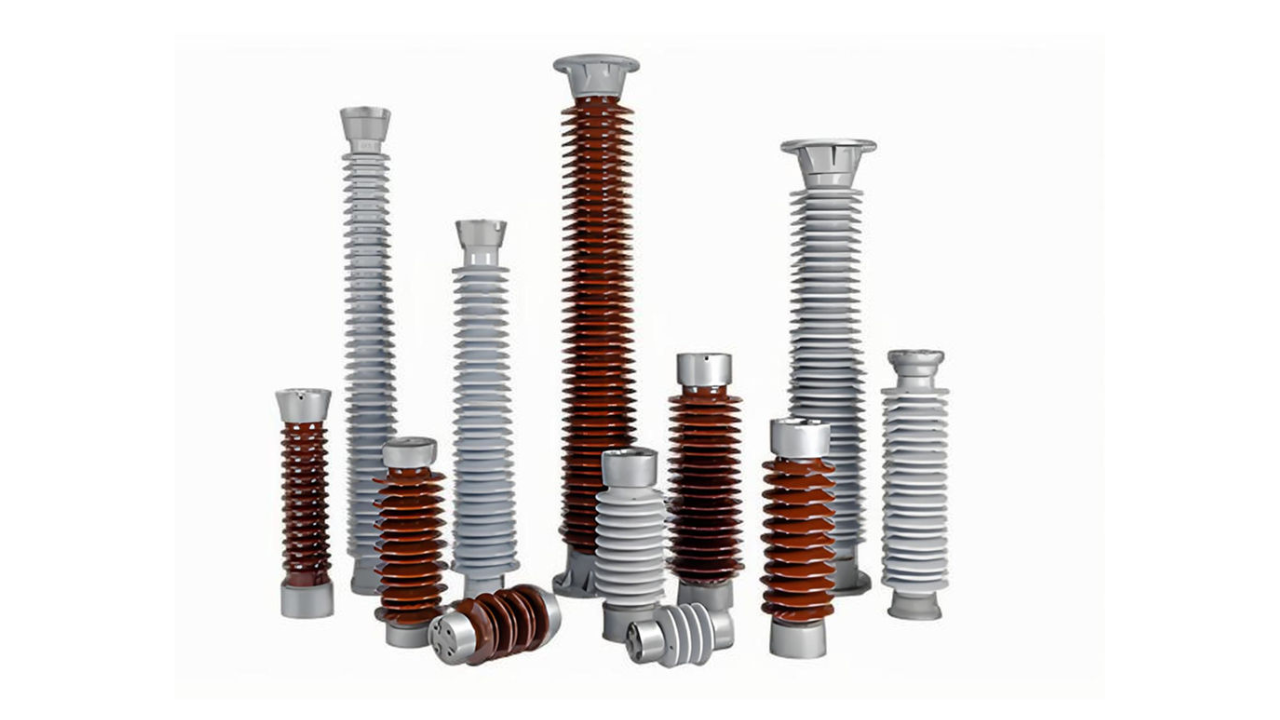
Before inspection, the power supply should be cut off first, and then the lightning arrester housing should be cleaned to remove dust and dirt to avoid affecting performance.
Check the Grounding System and Connection Points
Grounding is the only way for a lightning arrester to release energy. Regularly check whether the grounding wire, terminals and conductors are firm, free from corrosion and looseness.
Surge Counting Record
Check and record the data of the surge counter to understand how much surge the surge arrester has endured and determine whether the surge arrester is approaching the end of its service life.
Regular Inspection and Component Replacement
Once the lightning protection system malfunctions, the voltage generated by lightning strikes can reach as high as 1000kV, which can damage transmission lines, transformers and various electrical equipment. Even household appliances can be affected by extreme voltage spikes.
Therefore, a reasonable test plan is of great significance:
- The structural parts of buildings should be visually inspected every six months.
- The electrical test of the lightning protection system should be conducted at least once a year.
- An insulation resistance test should be conducted once a year to check for cracks, leaks or contamination.
- After encountering a strong lightning strike or a large switching surge, a more comprehensive and strict functional test should be carried out immediately.
In terms of replacement, it is also necessary to note:
- The pressure relief valve of the storage tank-type lightning arrester should be replaced or replenished every five years.
- Even if the varistor block appears intact, it is still recommended that you replace it every ten years.
Types of Lightning Arresters
Rod Gap Arrestor
This type of lightning arrester is often used in low-voltage lines. Its structure is very simple, with the ends of two metal rods forming an air gap. One end is connected to the line, and the other end is grounded. When high voltage suddenly appears in the line, the air gap will be broken through, and the current will be immediately directed to the ground, protecting your equipment from impact.
Multi-Gap Arrestor
A multi-gap lightning arrester is composed of multiple metal cylinders connected in series. Each cylinder has an independent air gap between them and is insulated from the others. The first end of the cylinder is connected to the power cord, and the last end is grounded. The higher the line voltage is, the more gaps are required. Once there is a surge, these air gaps will conduct electricity step by step, introducing high voltage to the ground, effectively protecting your power system and ensuring the safety of electricity usage.
Horn Gap Arrestor
It consists of two metal sheets in the shape of a trumpet, leaving a very small air gap in between, which are connected in parallel between the wire and the ground wire.
When the voltage is within the normal range, the lightning arrester has not yet reached the breakdown gap. However, when the voltage abnormally rises, the air gap will be broken down, forming a path to the ground. You can understand it as a protective device that “automatically diverts high voltage”.
Sphere Gap Arrestor
In this device, an air gap is formed between two independent metal balls, with one ball connected to the circuit and the other grounded. The gap distance is very small, and a choke is added to one side of the transformer for auxiliary protection.
When a high-voltage wave emerges, the air is broken through to form an electric arc. The electric arc will move upward along the spherical surface, gradually elongating as the hot air rises, and eventually be naturally. This type of lightning arrester can effectively divert high-voltage surges and also reduce the impact on equipment.
Metal Oxide Surge Arrester (MOSA)
The most commonly used type of lightning arrester in modern power systems mainly employs metal oxide varistors (MOV) to absorb surges.
MOV components are made of zinc oxide material and encapsulated in an insulating housing filled with nitrogen or sulfur hexafluoride. It does not require an air gap, has a fast reaction speed and a long service life, and is often used in high-pressure environments.
Surge Arresters vs Lightning Arresters
| Project | Lightning Arrester | Surge Arrester |
| Main function | Quickly introduce the lightning current into the ground to protect the equipment from direct lightning strikes. | Absorb or limit surges in the system and reduce voltage spikes to a safe range. |
| The types of threats to be dealt with | Handle the huge current and strong external impact from lightning strikes. | Handle transient voltages caused by switch operations, line faults or indirect lightning strikes. |
| Installation location | It is mostly installed on the top of buildings or at the entrance of power distribution points. | It is installed inside the main distribution board |
| Voltage level | It can withstand extremely high lightning strike voltage and strong discharge. | It has a lower discharge capacity than a lightning arrester in dealing with medium-voltage surges. |
| Response characteristics | Instantaneous conduction provides a direct grounding channel for lightning. | Clamp voltage spikes using MOV, spark gaps or gas discharge tubes. |
| Structural composition | Metal conductors, tip rods, grounding wires and grounding systems. | MOV, gas discharge tubes, spark gaps and other suppression components. |
| Scope of protection | Overall lightning protection for buildings or lines. | Surge protection for individual equipment or the entire electrical system. |
| Common uses | Lightning protection for power stations, transmission lines and substation equipment. | Protect household appliances, communication equipment and industrial systems from surge damage. |