
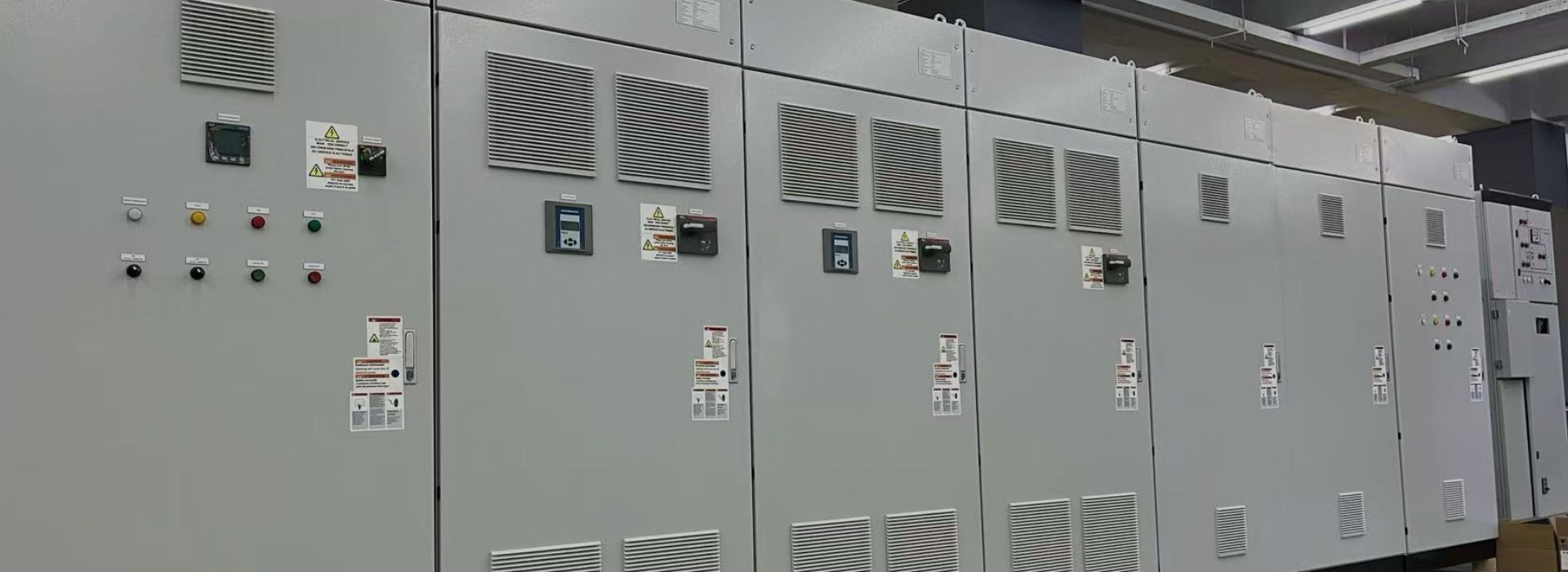
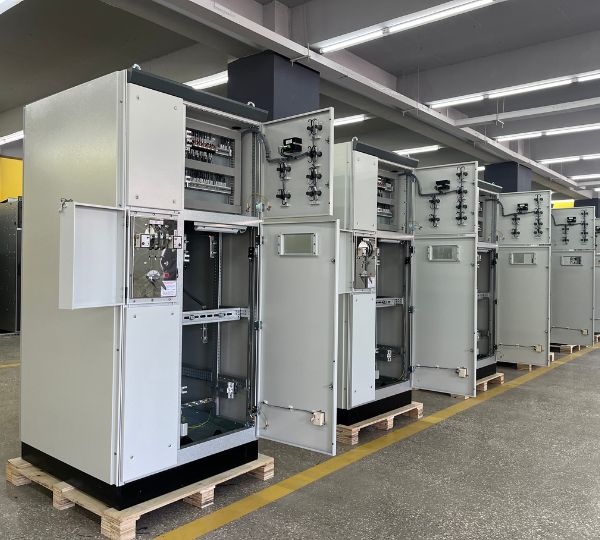
Features of Our Switchgear
- Compatible with multiple voltage levels, supporting low-voltage, medium-voltage, and other voltage ranges for flexible configuration of your power distribution system structure.
- Compliant with IEC, IEEE, and ANSI standards, designed and manufactured according to international electrical engineering standards to ensure safety and consistency during long-term operation.
- Certified under the ISO 9001 Quality Management System, each switchgear undergoes rigorous manufacturing and testing processes to guarantee performance and reliability.
- Provides stable protection and control capabilities for motor loads, impact loads, and continuous loads, adapting to diverse load scenarios.
- Offer Customizable solutions including dimensions, functional units, protection schemes, intelligent monitoring systems, and busbar structures to meet your project requirements.
ZHONGSHAO Switchgear Professional Supplier
Switchgear can provide your power distribution system with stable, reliable and international-standard protection and control capabilities. No matter if it is low-voltage, medium-voltage or high-voltage scenarios, ZHONGSHAO can deliver the best suitable switchgear solution for you based on the load characteristics, installation environment and expansion requirements of the project.
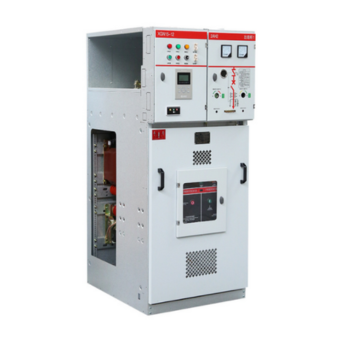
Our HV switchgears electrical equipment is used to control switching and routing power flow, and protects against faults and equipment for damages.
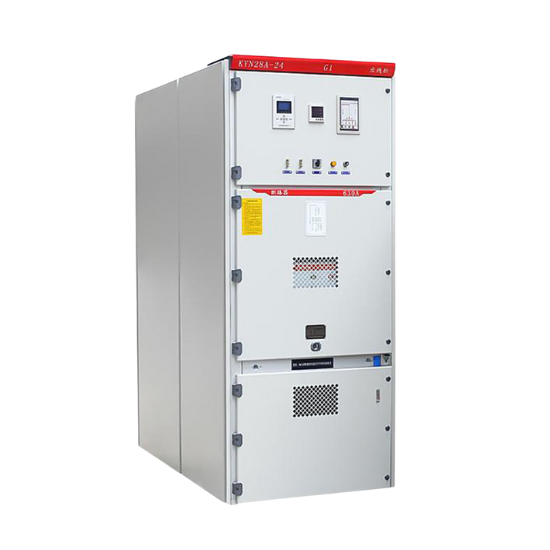
We offer MV switchgears that consist of circuit breakers, fuses, relays, and disconnectors to protect electrical equipment. It is also suitable for factories, large buildings, and data centers.
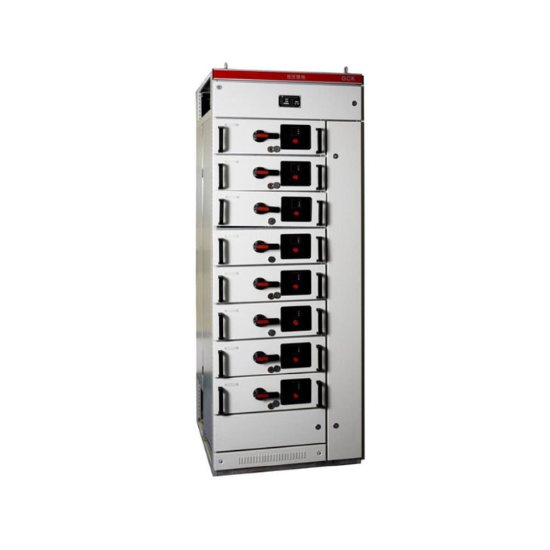
Designed to supply electric power at voltages up to 1000 volts and current up to 6000 amps. This is often found on the secondary side of a power distribution transformer.
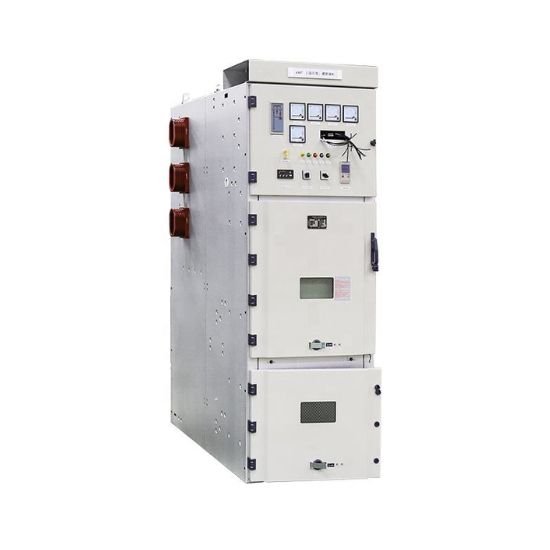
These switchgears utilize air for insulation between live parts and the grounded enclosure in medium- to high-voltage systems, and can be found in substations and industrial plants.
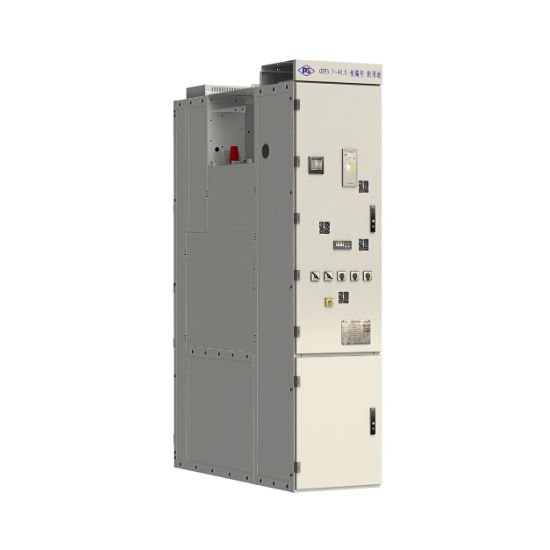
These are a metal-enclosed electrical system where high-voltage components are housed in sealed compartments filled with an insulating gas, such as Sulfur Hexafluoride (SF6).
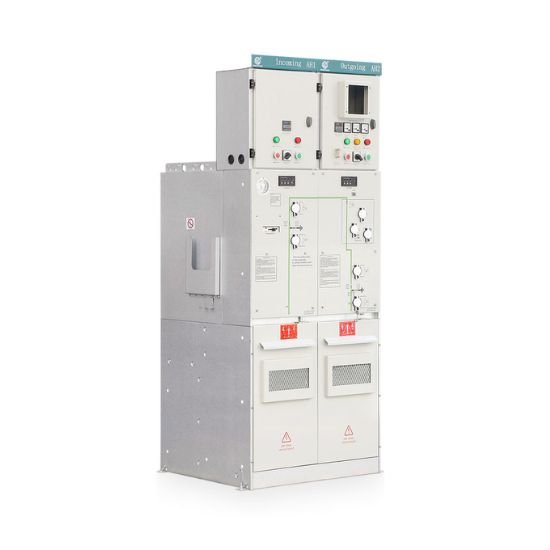
Our switchgear used to receive and distribute electrical power, which houses components like circuit breakers, bushbars, and controls in separate metal enclosures.
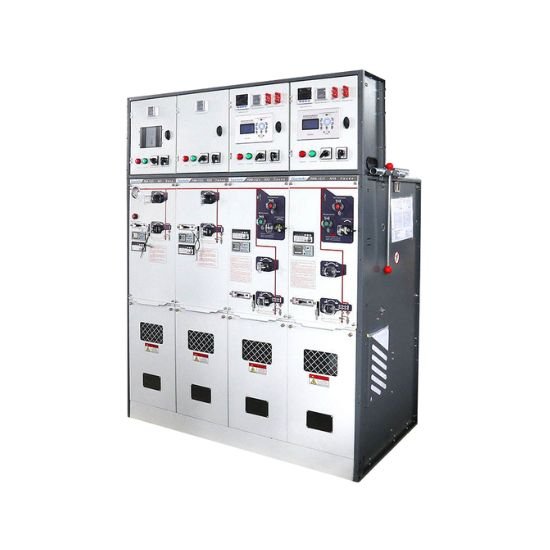
These are weather-resistant electrical system substations or on poles that protect, control, and isolate power circuits. Suitable for utility grids, industrial plants, and renewable energy sites.
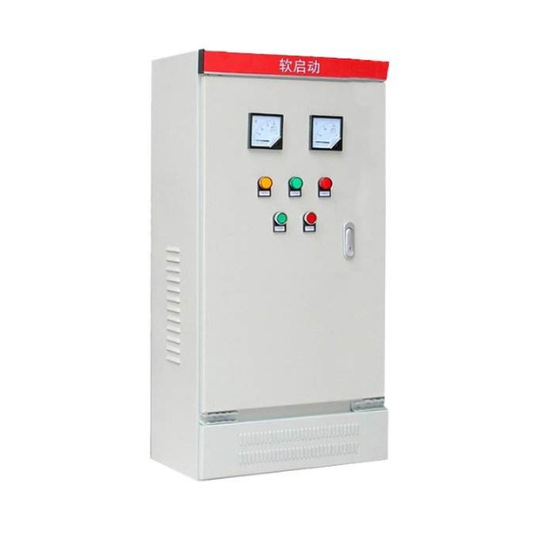
Our Motor Control utilizes centralised control, heling monitor and ensure maintenance of all motors. Enhanced operational safety and reliability through Zhongshao motor control systems.
What is Switchgear?
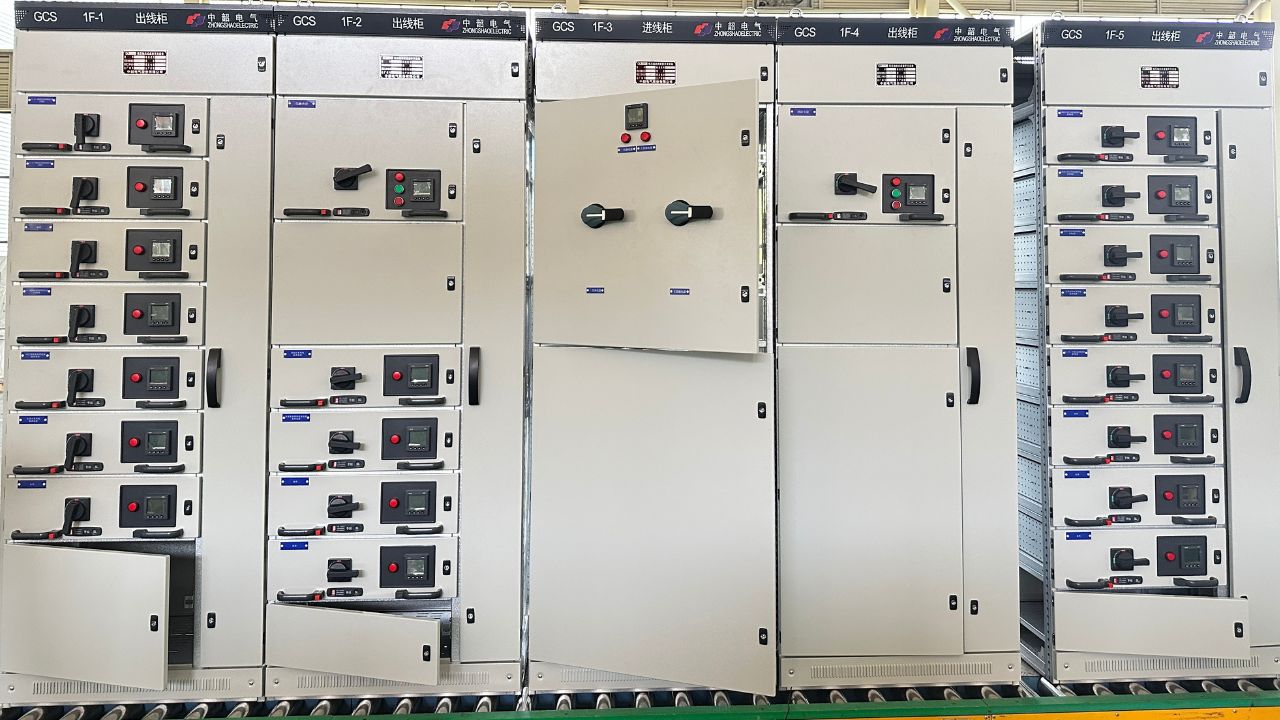
Switchgear is an integrated electrical device used in power distribution systems to control, protect and isolate circuits and electrical equipment. It is usually composed of primary equipment such as circuit breakers, disconnectors, contactors and fuses, and integrates secondary control units such as electrical measurement, protection relays and interlocking systems.
In industrial power distribution systems and substations, switchgear can help you safely control the distribution path of electrical energy, deal with short circuit and overload risks, and achieve reliable switching when maintenance or isolation of faulty circuits is required, ensuring the stability and maintainability of the entire power grid.
Switchgear Working Principle
Switchgear helps you avoid equipment damage and unplanned downtime by controlling, switching and isolating the current in the power system.
When faults such as surges, arcs or short circuits occur in the system, the circuit breaker will respond within milliseconds, quickly cutting off the faulty circuit to prevent the fault from spreading to the upper or adjacent circuits.
Meanwhile, the accompanying protection, monitoring and control units will dissipate fault energy, record event data, and maintain continuous power supply to other circuits. This ensures the availability of your system and minimizes the impact of power outages. When it is necessary, switchgear can also achieve safe switching between multiple power sources to keep the critical loads continuous running.
Switchgear Types
By Voltage
Low-voltage Switchgear
Low-voltage switchgear is applied in power distribution systems below 1 kV and is often used in industrial workshops, power control centers and commercial buildings for power distribution.
The equipment features excellent arc resistance, flexible system configuration methods, and can support a high short-circuit breaking capacity, enhancing the reliability and maintainability of your overall power distribution system.
Medium-voltage Switchgear
Medium-voltage switchgear takes vacuum insulation as its core, and is suitable for distribution networks ranging from 1 kV to 36 kV. It is widely used in factories, commercial complexes, energy stations and municipal power distribution projects.
Its oil-free design can effectively avoid the risks of fire and explosion. Moreover, the equipment can achieve the transfer from the high-voltage power grid to the low-voltage power in the workshop, and can supply power to multiple transformers and high-voltage motors at the same time.
High-voltage Switchgear
High-voltage switchgear is designed for transmission and substation applications above 36 kV, typically used for power control at the main grid level.
It has a higher dielectric strength and breaking capacity, which can effectively ensure the safety, stability and fault isolation capability of the power grid, and reduce the large-scale power outages risk.
By Insulation
Air-insulated Switchgear
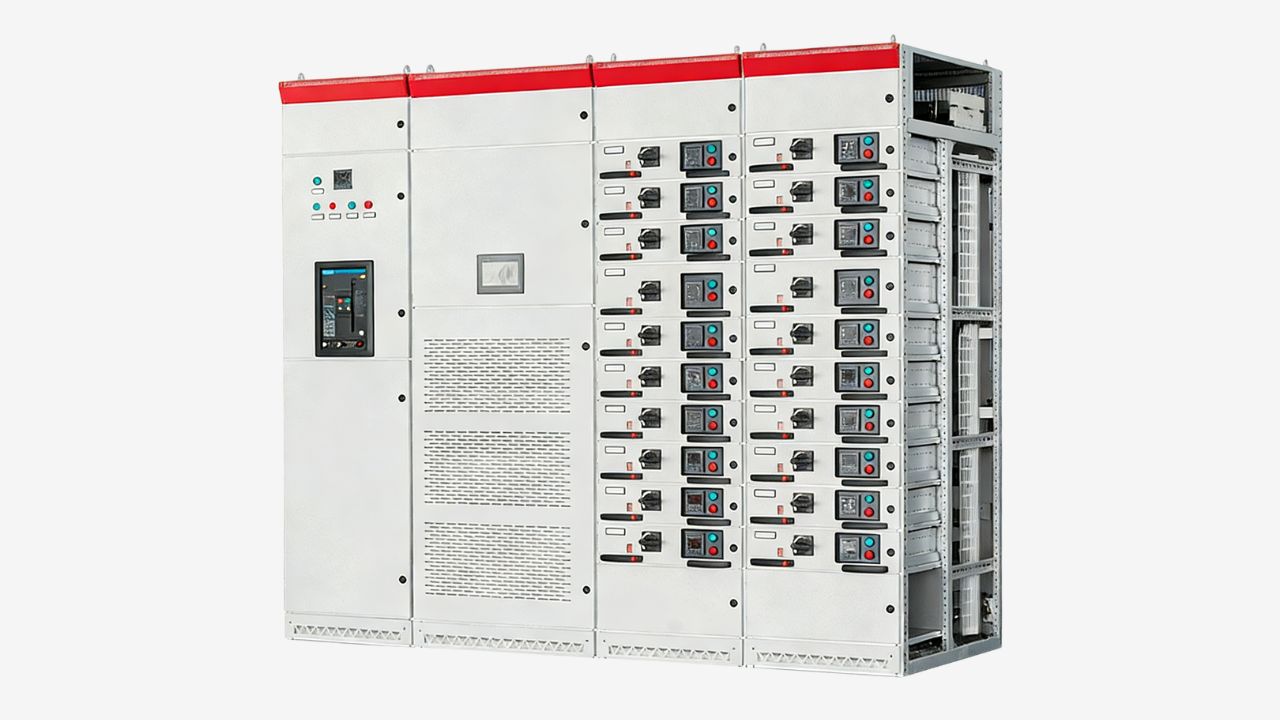
Air-insulated switchgear adopts compressed air or magnetic blow circuit breakers for arc extinguishing, which is currently the most economical and structurally intuitive solution. It has mature technology and is easy to maintain, suitable for scenarios with sufficient space and easy on-site maintenance.
However, compared with Gas-insulated switchgear, it shows lower insulation level and space utilization efficiency, and it is more sensitive to dust, humidity and corrosive environments. So if your project site is significantly affected by climate or pollution, it is necessary to assess its long-term reliability.
Gas-insulated Switchgear
GIS takes sulfur hexafluoride (SF₆) gas as the insulating and arc-extinguishing medium. It can provide you with excellent dielectric strength and operational reliability in a compact structure. It is particularly suitable for scenarios where space is tight or daily maintenance cannot be carried out, such as urban central substations, coastal areas, high humidity, high altitudes or sandy and dusty environments.
While, it is worth noting that you should pay attention to the greenhouse effect of SF₆ and local environmental protection regulations to ensure that gas recovery, leakage monitoring and operation and maintenance measures comply with standard requirements.
Oil-immersed Switchgear
Oil-immersed switchgear deliver you strong dielectric properties, excellent heat dissipation capacity and reliable high-voltage breaking performance. Mineral oil is the insulating and cooling medium for oil-immersed switchgear. And the switchgear can easily handle industrial applications with high current, heavy load and continuous operation.
When you choose the oil-immersed one, it is important to consider the oil treatment leakage risks, fire protection ratings and environmental management requirements, not suitable for stricter environmental protection or fire safety reviews.
Vacuum Insulated Switchgear
Vacuum insulated switchgear achieves arc extinguishing by vacuum circuit breakers and shows fast breaking speed, extremely low contact wear, and almost no require daily maintenance. It is widely applied in medium-voltage and some high-voltage scenarios, such as factory power distribution, mines, commercial buildings and regional substations.
Its compact structure can save you installation space and offer stable operating costs throughout its entire life cycle. If you pursue high reliability and low maintenance, it is the mainstream choice.
Switchgear Parts
Busbar
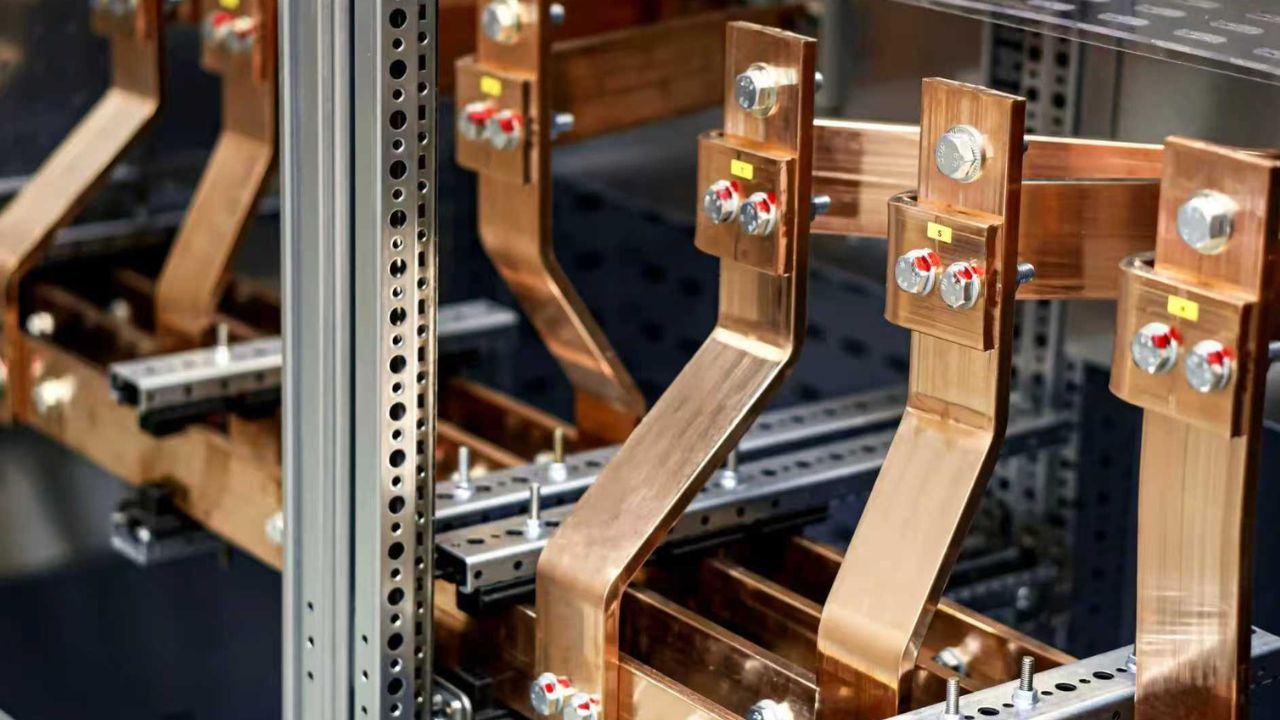
Busbar is the core load-bearing structure for the switch, used for efficiently conducting the current between each circuit. It is usually made of copper or aluminum and designed according to your requirements of rated current, temperature rise and short-circuit strength.
To handle scenarios of high short-circuit current or heavy-load operation, you can choose copper busbars or reinforced composite busbars, and conduct short-circuit force checks based on the actual operating short-circuit level. Those could ensure that your busbars can still maintain mechanical stability even under stress impact.
Circuit Breaker
Circuit breakers can quickly cut off faulty circuits in the event of short circuits, overloads or other abnormal conditions, and they are key equipment for the safety of the entire system. Although circuit breakers have isolation functions, they are not suitable for frequent operation.
Load Switch
Load switches can achieve circuit switching under load conditions, but they do not have the ability to deal with short-circuit currents. It is often used in the segmented and branch control of power distribution systems and for economic breaking requirements, and is a common control component in medium-voltage distribution cabinets.
Isolating Switch
Disconnectors reliably achieve the “visible break point” of circuits, ensuring that no current flows at all during maintenance and repair, and providing safety guarantees for on-site personnel. It cannot be used to break the load current, so it is usually used in conjunction with circuit breakers or load switches.
Fuse
Fuses realize a one-time rapid disconnection by rapidly melting the metal fuse under overcurrent conditions. They are often used for economical short-circuit protection in transformer incoming lines, distribution circuits, or specific industrial equipment.
For some medium-voltage applications, you can combine fuse with load switches to form fuse combination electrical appliances, which are used to provide efficient short-circuit breaking capacity.
Transformer (CT/VT)
Current transformers (CT) and voltage transformers (VT) can convert the high voltage and high current of the primary system into standard signals, enabling your protection devices and measuring instruments to precisely monitor the operating status.
Enclosure
The switch cabinet enclosure is usually made of powder-coated cold-rolled steel plate, stainless steel or aluminum alloy. Its structural strength depends on the thickness of the plate, the form of the frame support and the overall processing technology.
For scenarios that require a higher safety level, arc light protection design can be configured to reduce the risk of internal fault arc light impact on equipment and personnel. The enclosure can be provided with multiple protection grades (such as IP3X – IP65), suitable for different installation environments including indoor, outdoor, humid, dusty and chemically corrosive ones.
Its modular structure enables you to flexibly expand loops, arrange communication and control cables, and maintain good heat dissipation performance. The switch cabinet enclosure can also be seamlessly connected with the transformer enclosure, motor control center (MCC) or frequency converter cabinet to create a complete power distribution system.
Protection Device
Lightning arrester: The lightning arrester provides a low-impedance path to quickly discharge high-voltage surges generated by lightning strikes or system operations to the ground. This could protect transformers, lines, and other sensitive equipment. It is usually installed at the line entrance, the high-voltage side of the transformer and key nodes.
Relay protection device: The relay protection device analyzes the signals provided by the transformer. When it detects abnormalities such as overcurrent, short circuit, and ground fault, it will precisely trigger the circuit breaker to trip. Common ones include overcurrent protection, short-circuit protection and ground fault protection.
Switchgear Advantages
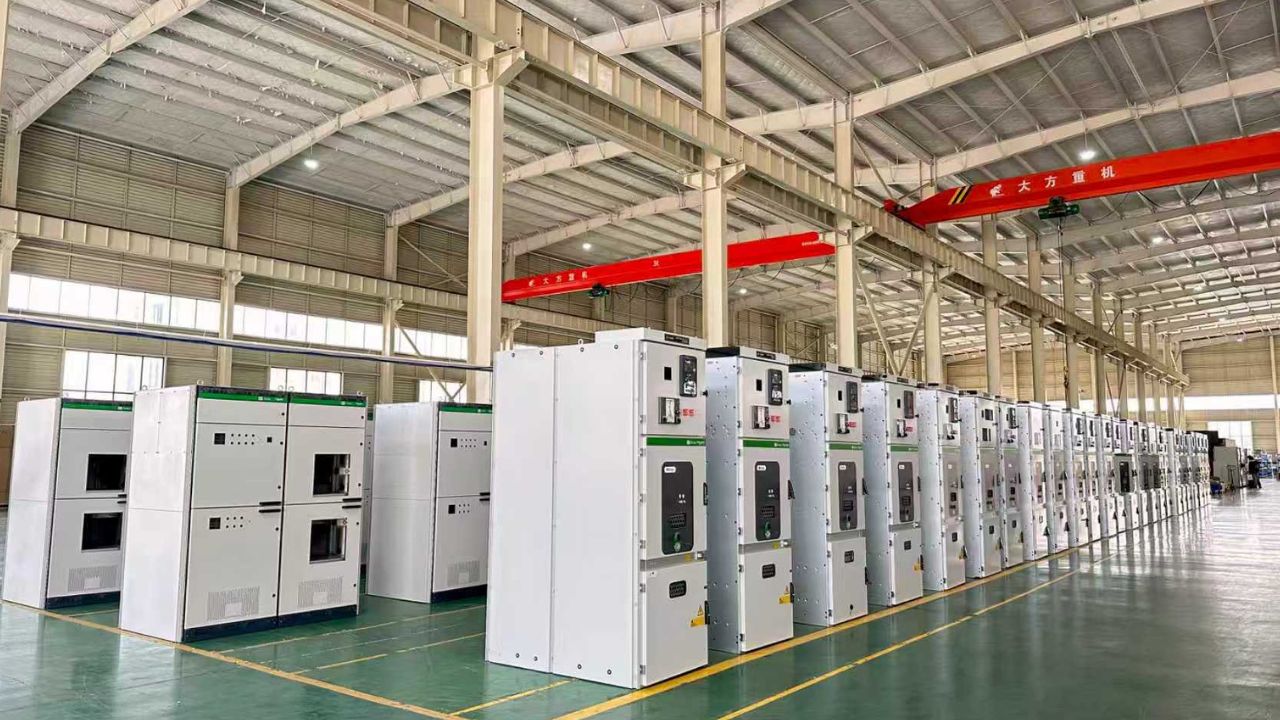
Protect
By coordinating circuit breakers, relay protection devices and busbar structures, it can significantly reduce the risk of equipment damage caused by short circuits, arcs, overcurrents or surges. Key protected objects include transformers, distribution cabinets, critical load motors, generators and sensitive electronic equipment.
This protection extends the lifespan of assets and also effectively reduces maintenance costs and unplanned downtime caused by malfunctions, helping you maintain stable operational efficiency.
Low Failure
The switchgear has undergone rigorous tests for temperature rise, dielectric strength and short-circuit capacity, and can remain stable under harsh conditions such as high current impact, short-circuit electromotive force and occasional overload. It could provide you with a reliable operating state even for a long time.
Continuous Work
When anomalies such as surges, arcs or short circuits occur in the power system, switchgear can quickly disconnect the faulty circuit within milliseconds, isolate the affected area, and ensure the continuous normal power supply to the remaining circuits.
This local isolation capability can prevent faults from spreading to the upper-level transformer, busbar or adjacent outgoing lines, significantly reducing your power outages scope.
Customized
You can configure and customize Switchgear according to your project requirements, including the number of circuits, busbar specifications, capacitor capacity, etc. These customization options can better match your power distribution planning and budget strategy, enhancing the adaptability and scalability of the system.
Standards for Switchgear
ANSI (American National Standards Institute) : ANSI standards similarly cover circuit breakers, protective devices, and metal-enclosed switchgear, emphasizing structural safety, interrupting performance, and long-term stable operation. This standard is widely applied in industrial facilities, power plants, data centers and public utility engineering projects.
IEEE (Institute of Electrical and Electronics Engineers) : IEEE standards are widely used in engineering projects in North America and around the world, emphasizing high reliability of equipment and a rigorous performance verification system. IEC 37 covers areas such as medium and high voltage circuit breakers, busbar systems, and gas-insulated switchgear (GIS).
IEC (International Electrotechnical Commission) :IEC standards are globally recognized and emphasize performance-oriented switchgear, which are widely used in Europe, Asia and Australia. These standards make sure international interoperability, security and consistency in manufacturing quality. For example, IEC 62271 is applicable to high-voltage switchgear.
Technical Specifications of ZHONGSHAO’s Switchgear
| Type | Switchgear | Standrad | ANS/IEEE/IEC |
| Rated voltage | 0.4kV, 10kV, 35kV, 110kV, 220kV… | Certification | ISO9001, OHSAS 18000 |
| Size | Customizable | Material | Mental |
| IP Level | IP30, IP44, IP54, IP65… | Inspection And Test | Provided |
| Protective Function | Overload protection, short-circuit protection… | Warranty | 2 Years |
Consideration for Switchgear
Voltage Rating
The voltage rating of switchgear must match your power distribution system architecture and the rated voltage of the upstream power source.
Load Requirements
When selecting load, you should comprehensively consider maximum operating load, future expansion capacity, and load fluctuation characteristics. And the continuous current capacity should suit your main circuit power requirements as well.
Installation Environment
The installation environment directly affects the switchgears’ structural, enclosure protection rating, and material selection.
If its applications are in humid, high-dust, highly corrosive, or high-temperature environments, you need to select enclosures with higher protection ratings (like IP54/IP65), stainless steel or reinforced construction.
Expandability
If your projects anticipate future expansion, it is necessary to plan in advance the busbar interface, the position of the expansion cabinet or the withdrawable functional units in the switch cabinet. This design can make sure subsequent upgrades do not affect the downtime range and operational stability of your existing system, and is particularly suitable for continuously growing power consumption scenarios such as factories, power facilities, data centers, and large commercial complexes.
Switchgear can usually operate stably for 10 to 20 years. Its lifespan is influenced by multiple factors, including the operating environment, load level, and switching frequency, etc.
It is recommended for you to conduct regular thermal imaging inspections, bolt tightening checks, partial discharge tests and calibration of protective devices. At the same time, keep the cabinet clean, dry and ensure good ventilation.
To ensure the safety of personnel and equipment, it is not suggested to perform live maintenance on conventional low-voltage and medium-voltage switchgear.
If the system adopts a drawer design, under the premise that a specific circuit is completely isolated, you can carry out unit maintenance while the busbar is energized.
Switchgear is suitable for distribution and protection scenarios from low to high voltage levels.It achieves fault isolation, system separation, and short-circuit or overload protection through components such as circuit breakers, disconnectors, fuses, and relay protection.
MCC (Motor Control Center) is specifically designed for managing motor groups and is typically deployed in low-voltage systems. Its core functions cover motor starting, protection, monitoring and control, integrating components such as contactors, soft starters and voltage regulators.